 Project Type: Cultural Center
Location: Nawalpur, Nepal
Site Area: 15495.09 sq. m.
Year: 2025
Project Description:
About Tharus:
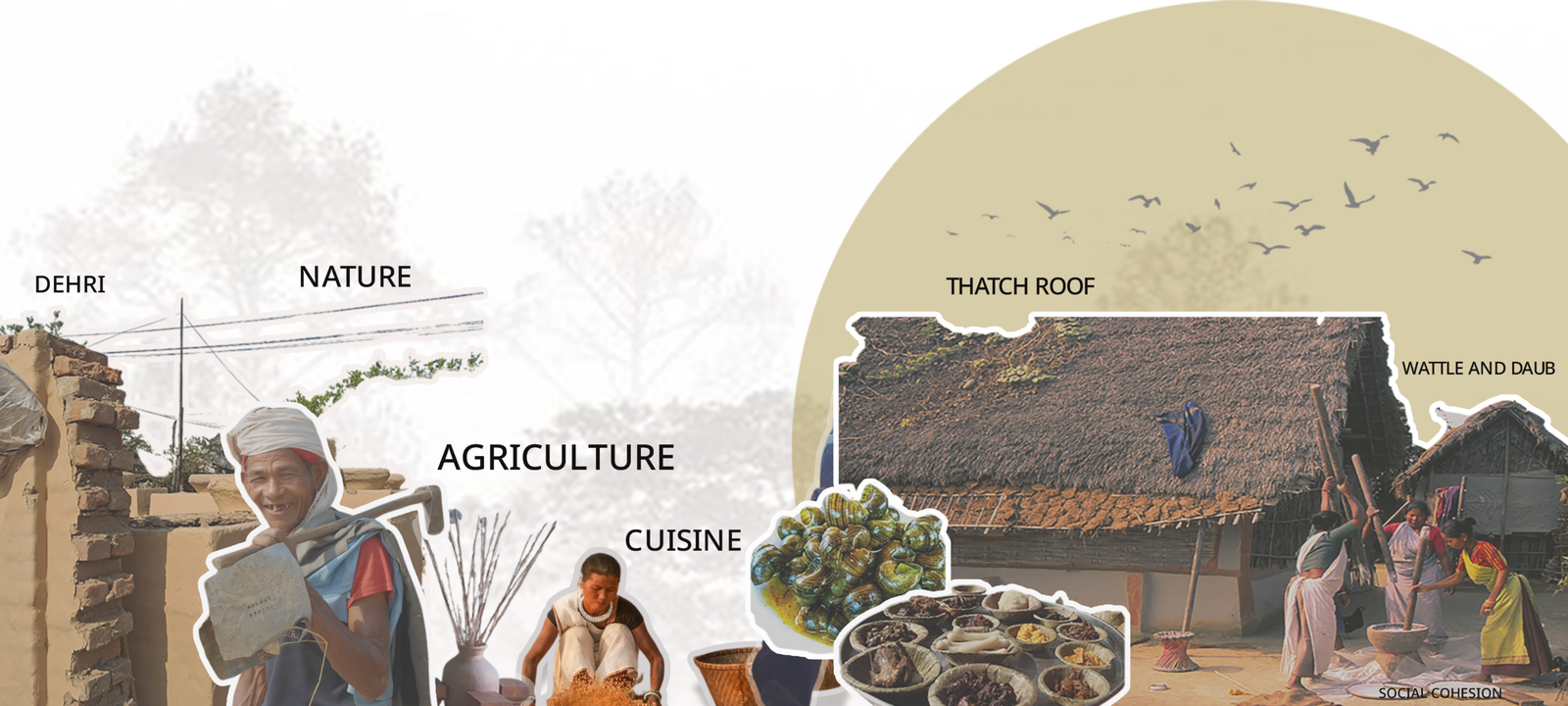

Tharus are one of Nepal’s oldest indigenous communities, rooted in the Terai lowlands for centuries. Their origins are debated; some trace them to Rajput ancestry from Rajasthan, while others link them to the Shakya dynasty, but their deep belonging to the land is undeniable.
Tharu settlements hug the southern belt of Nepal, close to rivers, dense forests, and fertile fields. In Kawasoti, Nawalpur alone, Tharus make up over 20% of the population, the second-largest community in the municipality. Their villages, called Gaun, are scattered across the landscape, connected by mud paths, organized around U-shaped courtyards, communal chowks, and the shade of pipal trees.
A typical Tharu house is a living document of their culture. Built from bamboo, mud, thatch, and wattle-and-daub, it is oriented north–south to beat the Terai heat. The layout is divided into the bahari (outer) and bhitar (inner) zones, spaces for social life, daily work, animal care, grain storage, and a sacred room (Deurar) for the ancestral deity.
Tharu cultural life is rich and layered:
- Dance — Latthi Nach (stick dance), Jharra Nach (women’s celebratory dance), Jhumra Nach, and Sakhiya Nach fill festivals with rhythm and story.
- Festivals — Maghesakranti (their New Year), Fagupurnima, Jitiya Parba, and Dashain—mark their sacred calendar.
- Craftsmanship — from Ashtimki wall paintings made with red clay, bean-leaf green, and burnt grass black, to hand-woven baskets, Godana tattoo art, and ornaments like Nathiya, Hansuli, and Tadia.
- Music — instruments like Dhamphu, Mandra, Basiya, and Sitar accompany every ritual and celebration.
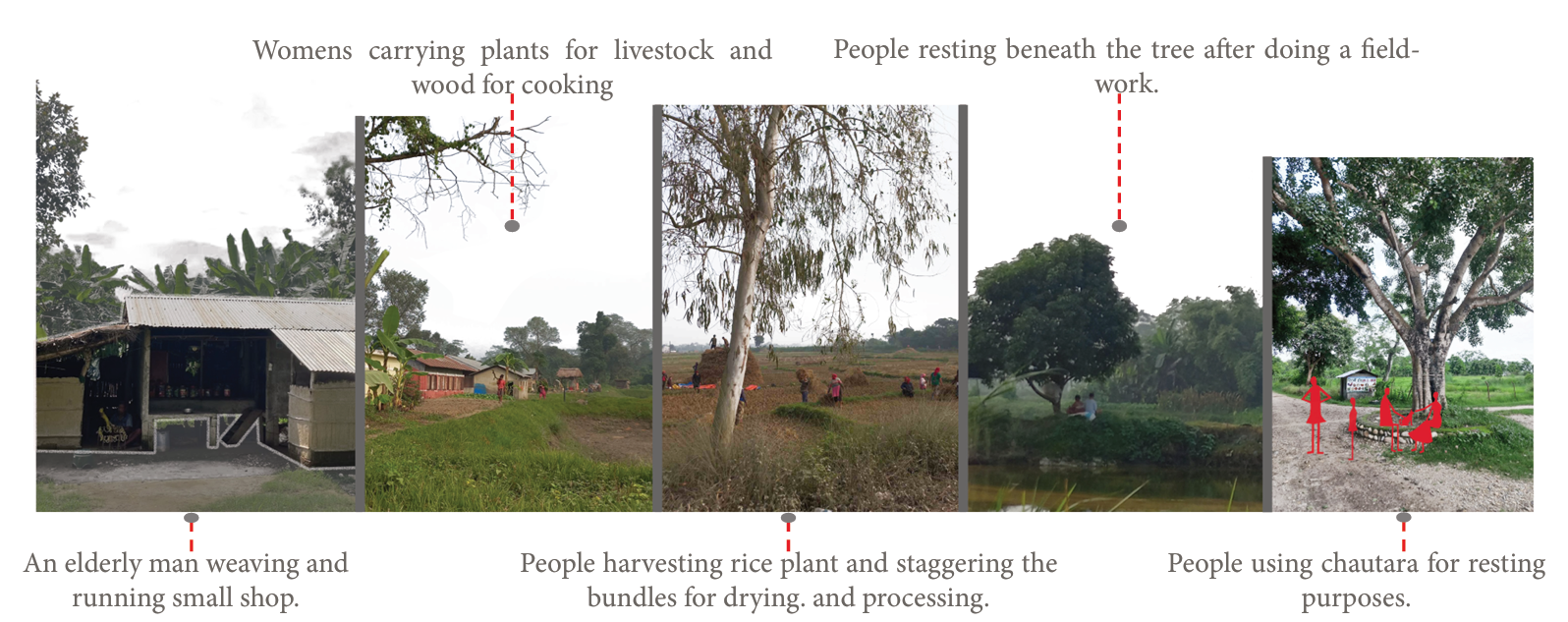
Tharus have always lived with nature, not against it. They fish in rivers, graze animals in forests, and rely on medicinal plants known only to their Gurau (spiritual healer). Their architecture, agriculture, and daily rituals all mirror this intimate bond with the natural world.
They are historically marginalized through bonded labor (Kamaiya system), displacement after malaria eradication, and being categorized under identities not their own. Tharus have consistently fought for recognition, land, and cultural dignity. Today, they are recognized as Janajati (indigenous people) of Nepal, and their cultural heritage is irreplaceable.
Intent of the Project
This project proposes a community-focused learning center designed to serve as a shared space for education, skill development, and social interaction. The design philosophy is based on openness, accessibility, and adaptability, which means that the building can host a wide range of activities throughout the day.
The layout is organized around courtyards and semi-open spaces that encourage informal learning and interaction. Locally available materials and passive design strategies were incorporated to reduce environmental impact while ensuring thermal comfort. The architecture aims to create a welcoming environment that fosters community ownership and engagement.
Site Dynamics
The site is located in Ward No. 15 of Kawasoti Municipality, Nawalpur District, Gandaki Province.
The village is adjacent to the Narayani River and the Gundahai Dhakaha Buffer Zone Community
Forest of Chitwan National Park. The present use of the site is as agricultural land. The area is
predominantly inhabited by Tharu people, including castes such as Chaudhary, Mukhiya, Thanet,
Dhami, Mahato, and Gurau, with a small presence of other castes.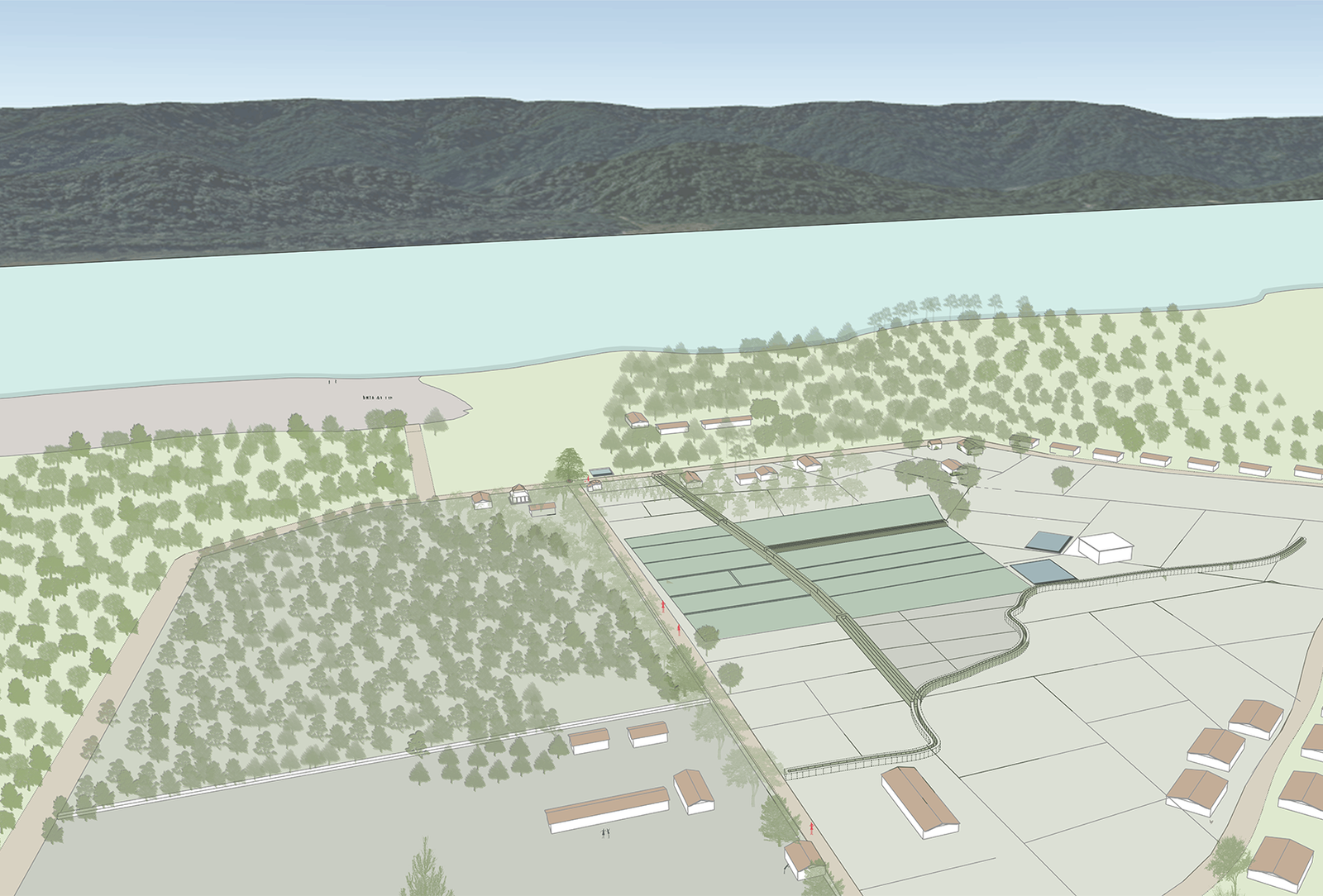
The site is situated between a settlement area and the buffer zone of the Gundahai Dhakaha community forestry, part of the Chitwan National Park buffer zone. This positioning enhances the site’s relevance for cultural tourism, offering an intersection of nature and local tradition. The presence of numerous homestays and resorts further emphasizes the area’s potential for community-based tourism, catering to visitors seeking immersive cultural experiences and eco tourism opportunities.
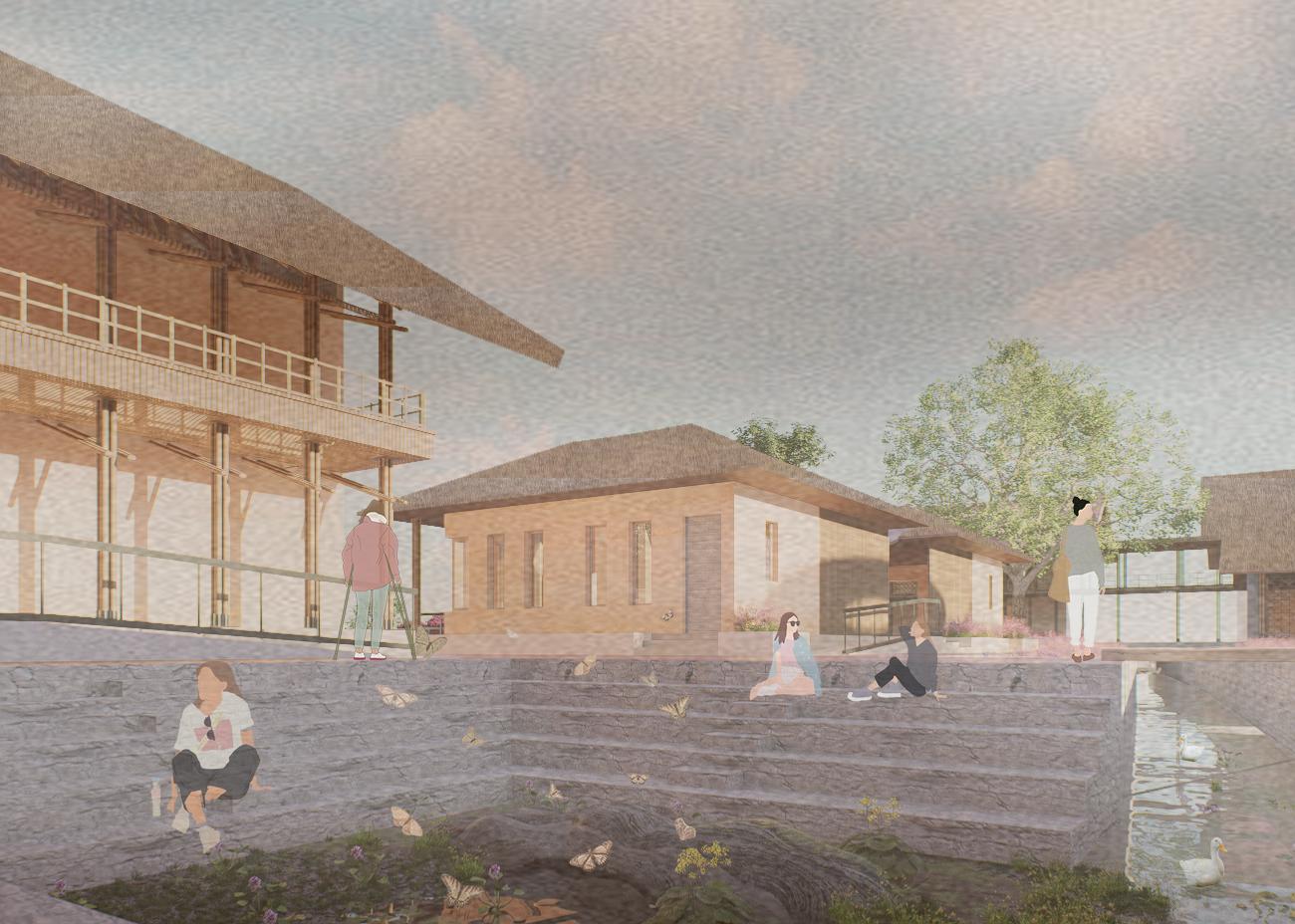
The road leading to the river, commonly used for ritual works, is not perfectly paved, reflecting the rural setting and the traditional practices of the community. This path holds cultural significance, as it connects the settlement to the Narayani River, an important site for local rituals and ceremonies. There is an existing irrigation canal in a site which needs to be preserved while designing a centre. The site is located at an altitude of 160 m from sea level and the main entrance is from east direction.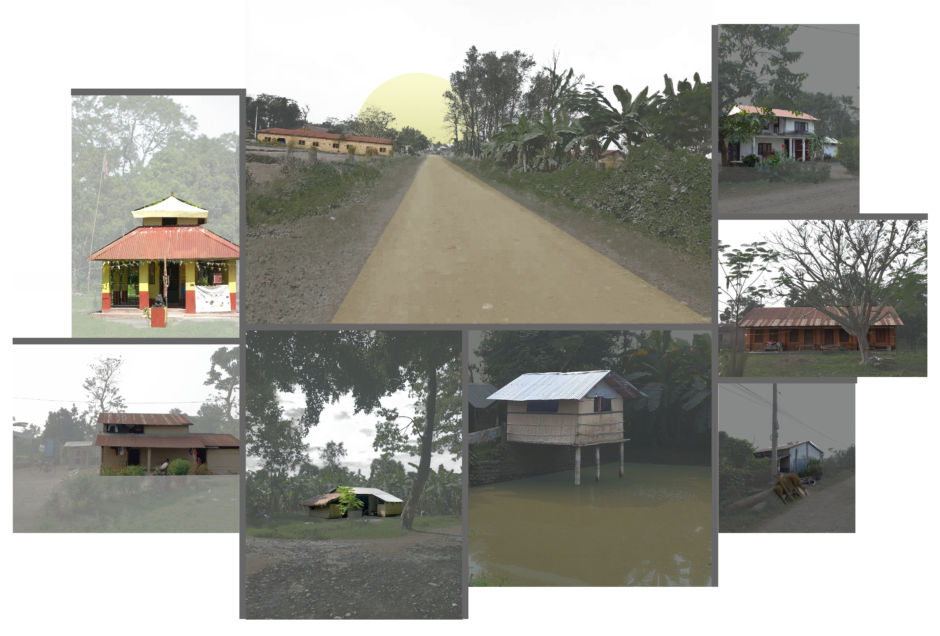
Concept Development
Inspiration from the Courtyard Settlement
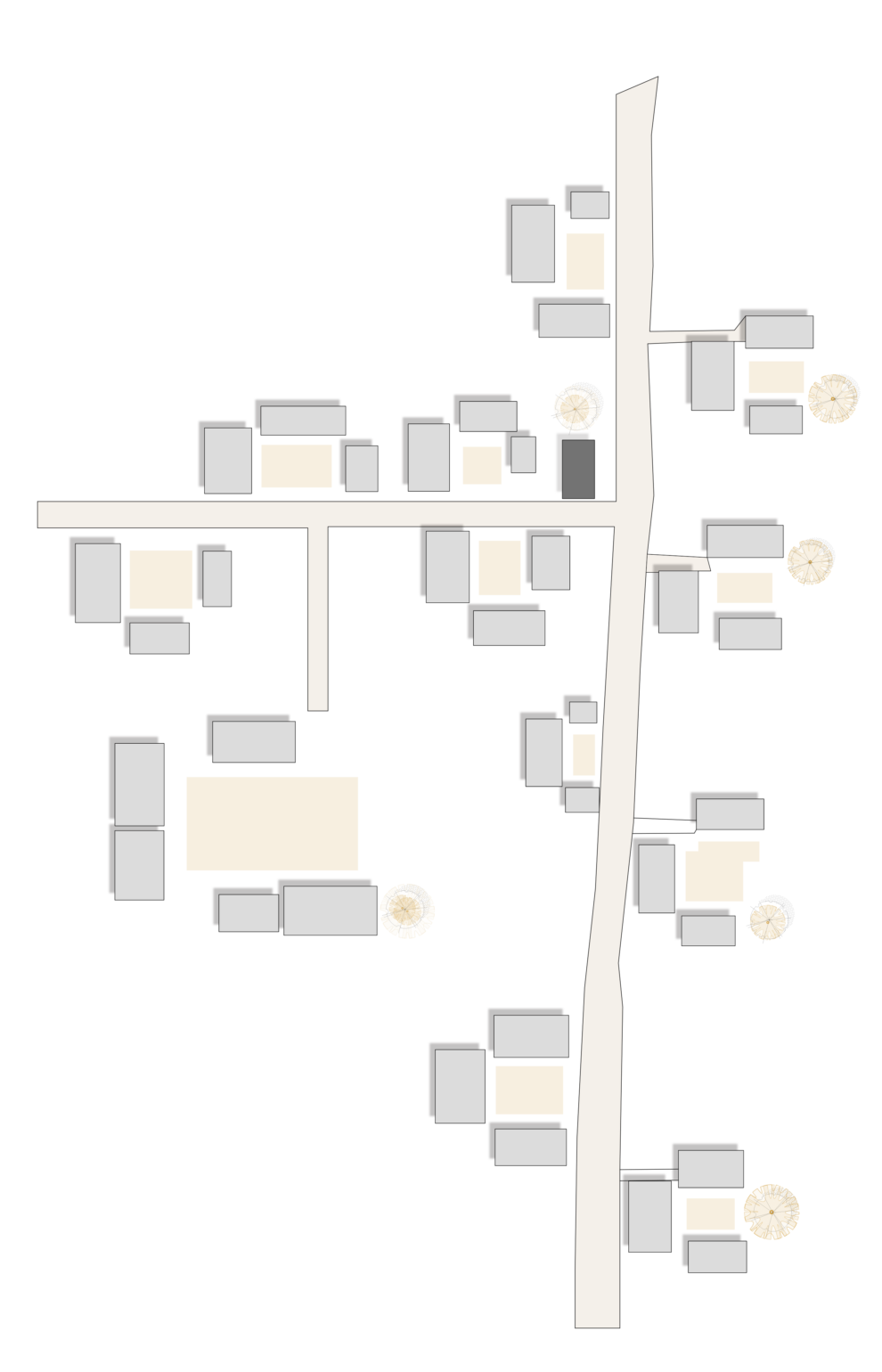
Courtyards have long served as the nucleus of domestic and communal life in vernacular
architecture, particularly in South Asia. Traditionally, they have functioned not merely as
spatial voids but as socio-cultural arenas creating breathing spaces that regulate climate,
encourage interaction, and facilitate everyday rituals. According to Oliver (2006), the courtyard
typology plays a central role in indigenous settlements, reflecting a deep connection between
built form and the rhythms of life.
In the context of settlement in Nepal, the courtyard is more than just an architectural feature .It
is a cultural expression. It shapes social dynamics, organizes domestic routines, and enables
collective practices such as cooking, drying crops, storytelling, and celebrating festivals. Each
courtyard becomes a microcosm of Tharu life, reflecting the community’s values of openness,
togetherness, and respect for nature.
Courtyard as Narratives.
The design of the Tharu Cultural Tourism Centre draws deeply from the traditional Tharu 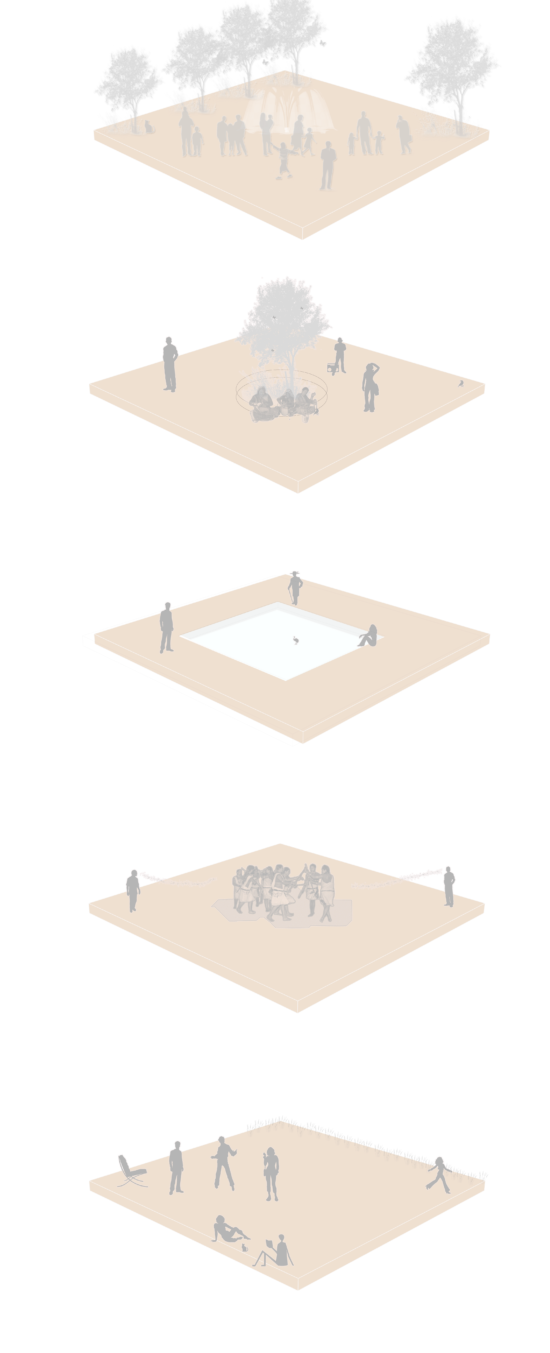
settlement structure, where courtyards are not just an architectural element but also vital spaces
of culture, community, and continuity. This principle shapes the overall layout, where
courtyards act as connectors between blocks, guiding spatial flow and creating smooth
transitions between public, semi-public, and private zones.
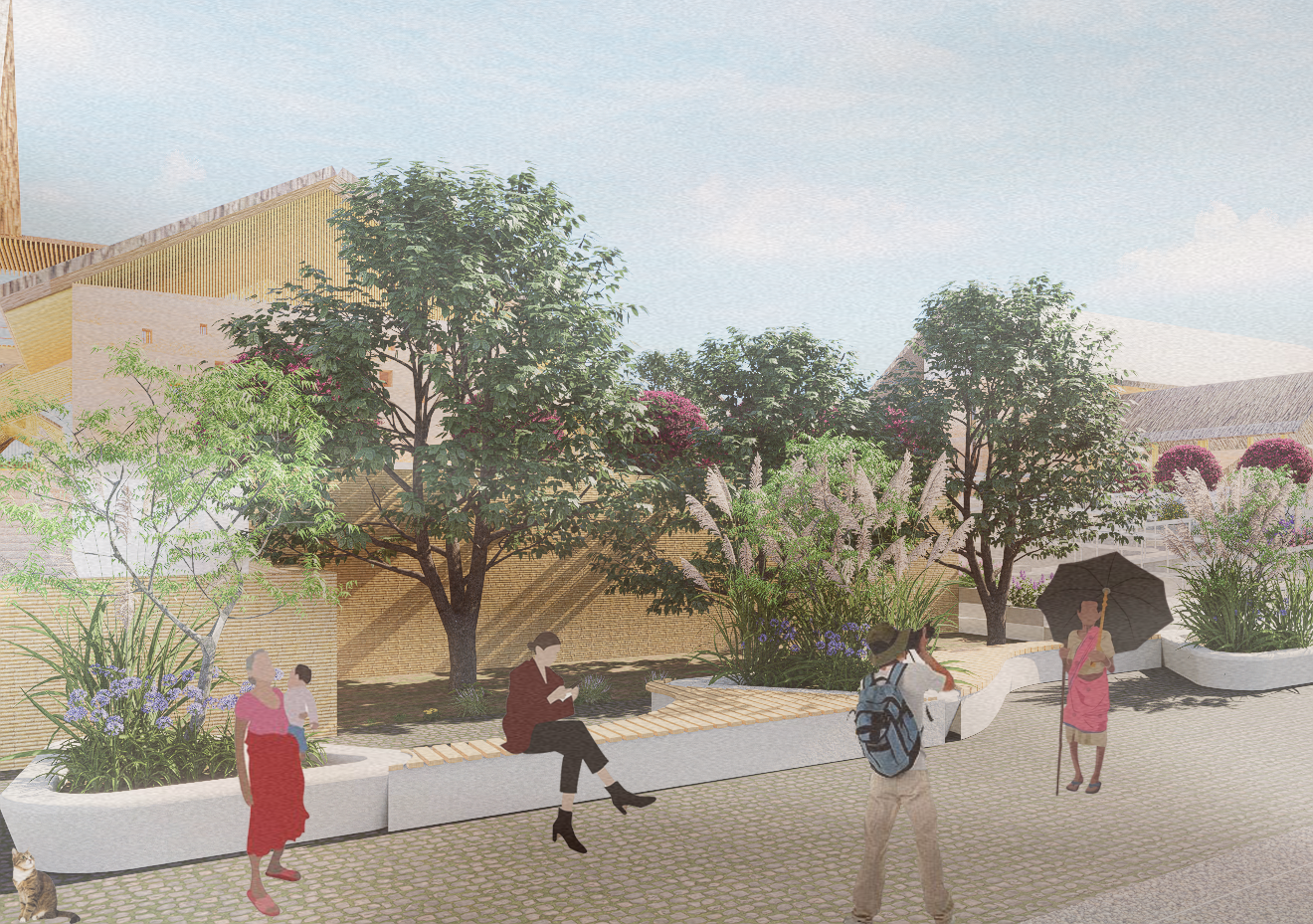
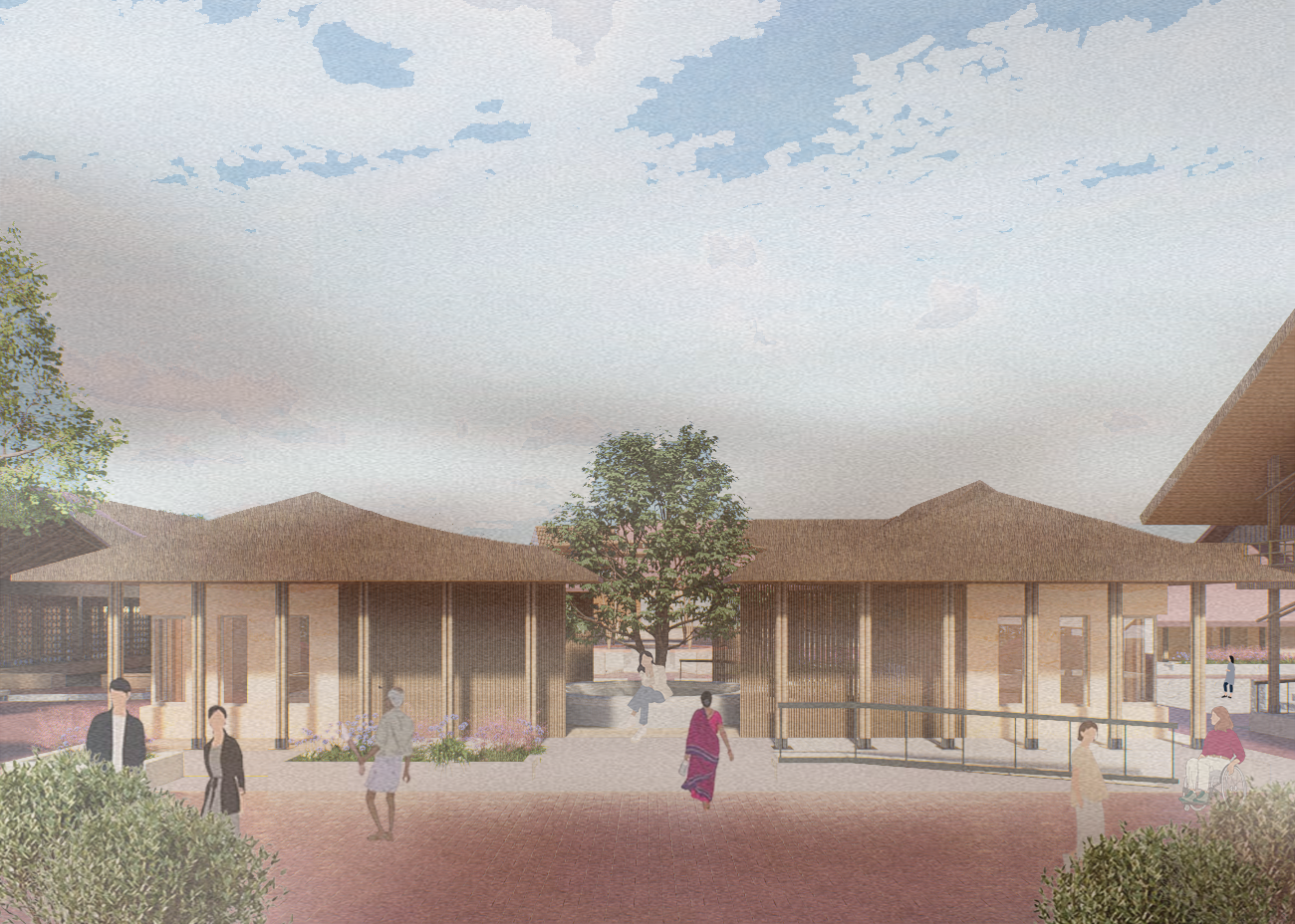
Each courtyard is thoughtfully designed to offer a distinct experience, from welcoming entry
points to interactive areas, reinforcing the unique identity and narrative of each block. The
architectural language reflects traditional Tharu aesthetics through earthy walls, natural
materials, and sloped thatched-style roofs, reinterpreted using modern construction techniques.
Conceptual Zoning
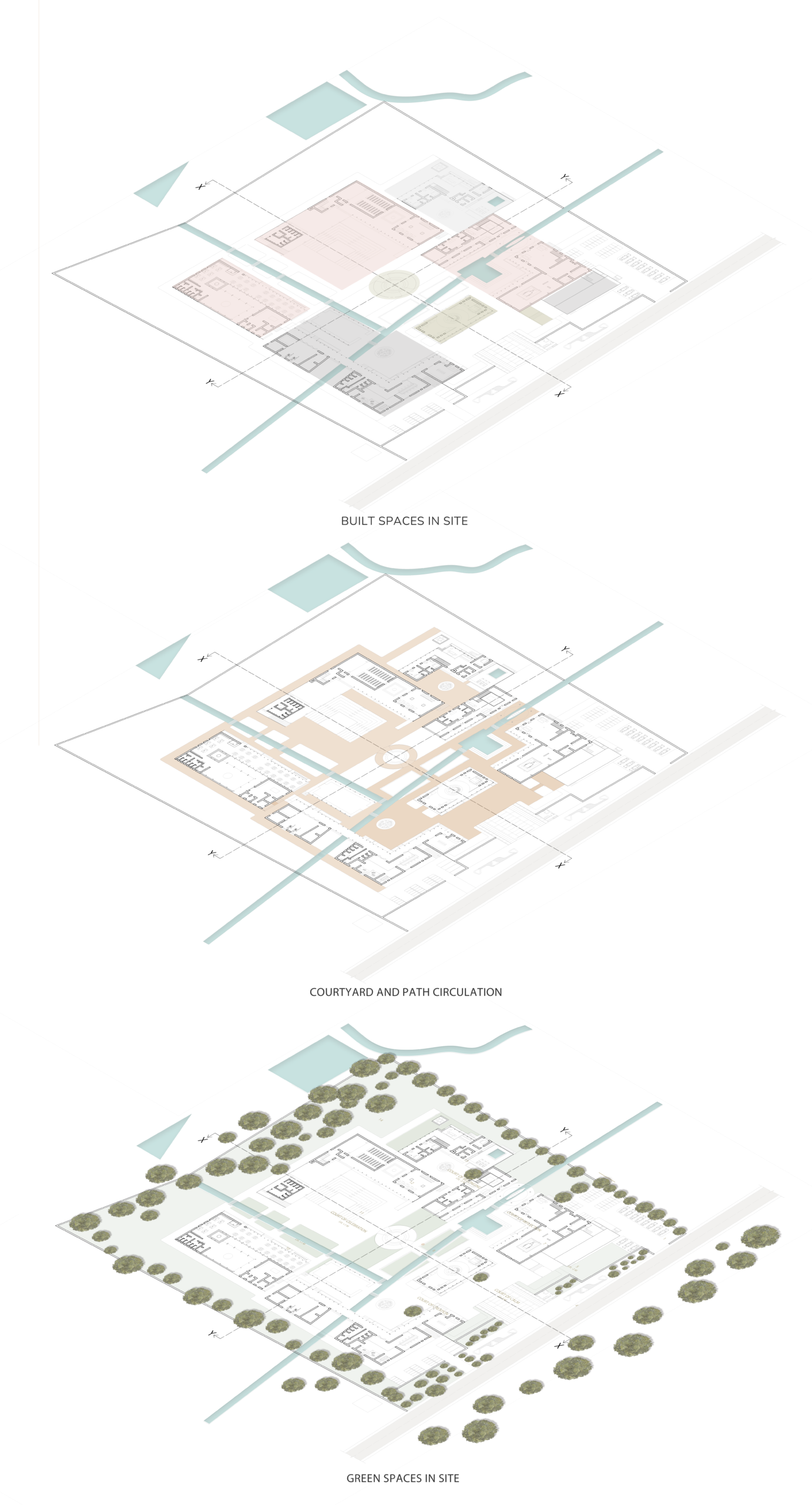
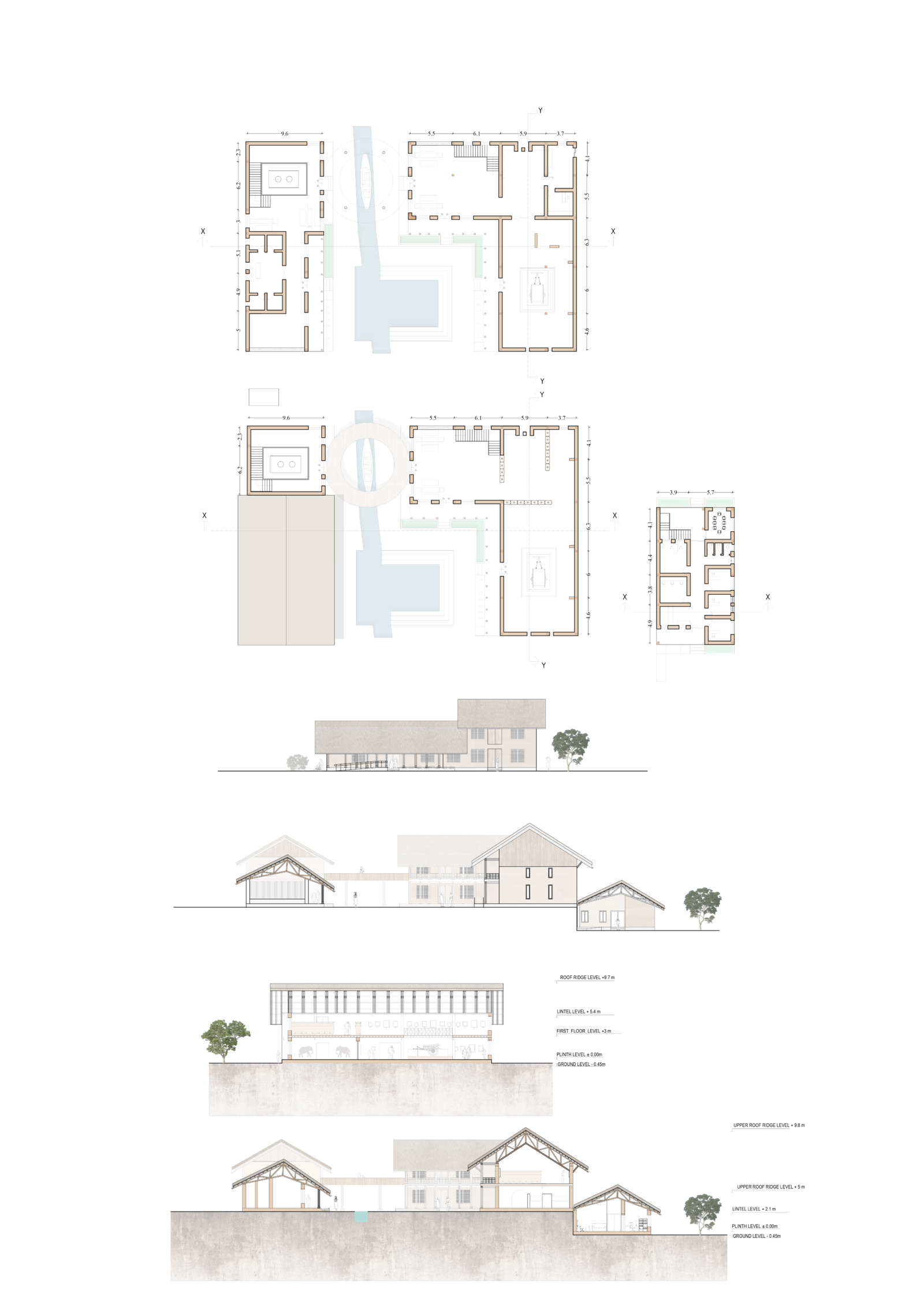
The spatial organization of the Tharu Cultural Tourism Centre is informed by both functionality 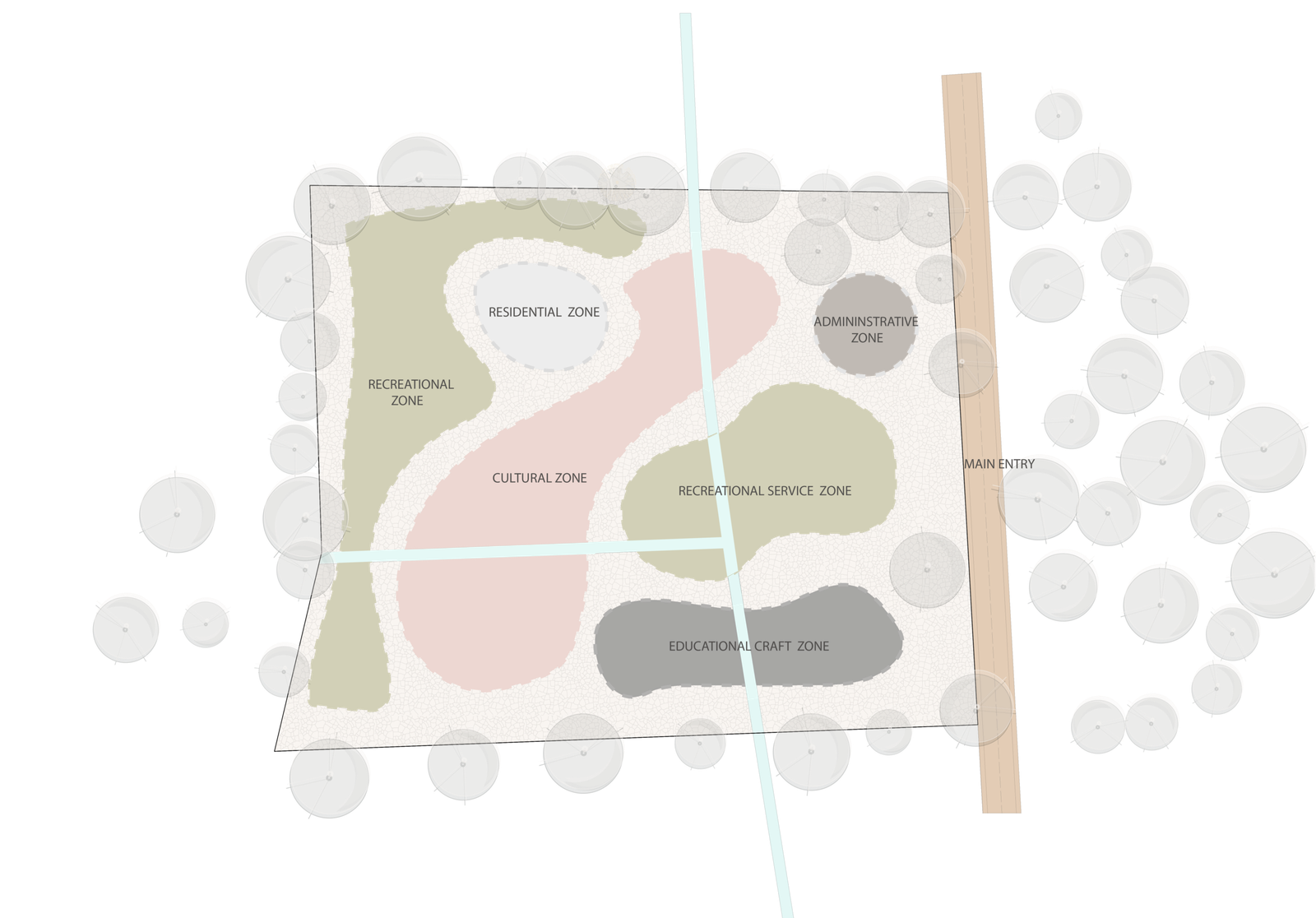
and flow, with zones designed to reflect the rhythms of Tharu life while facilitating visitor
movement and engagement.
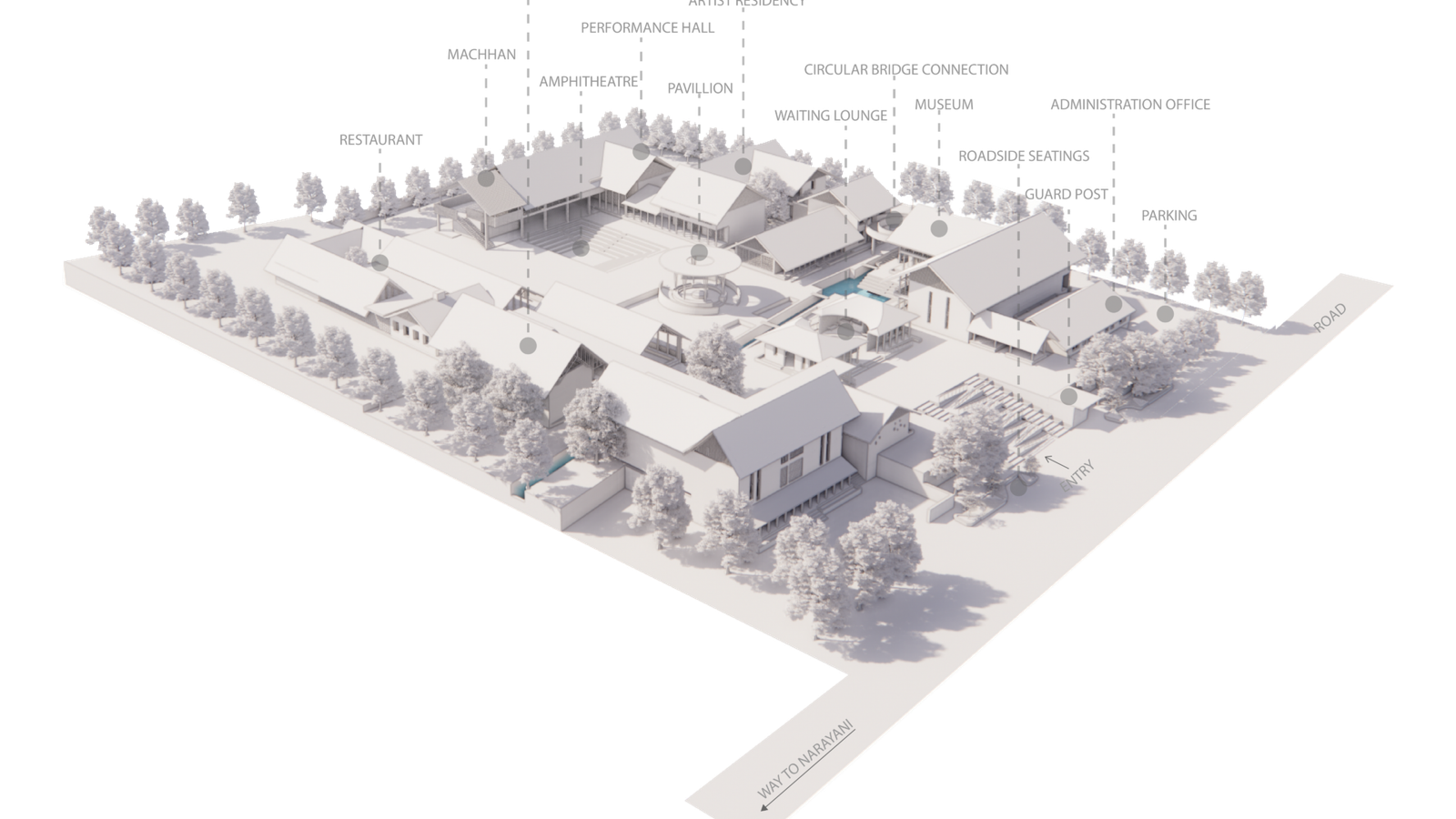
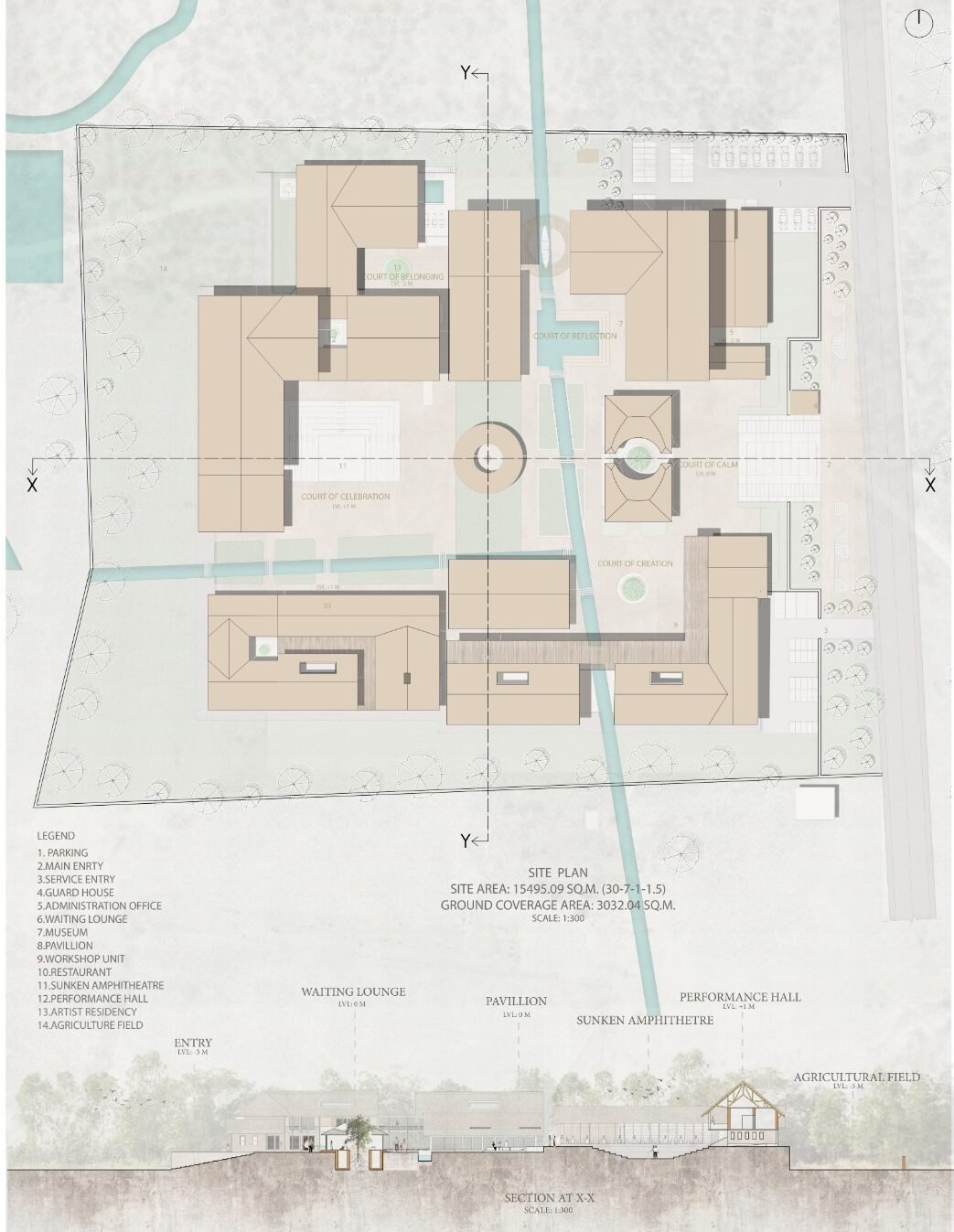
Main Entry: It is located along the eastern edge. The entry acts as a primary threshold into
the site, providing direct access to the court of calm.
Administrative Zone: It is positioned near the parking for ease of access and management.
This zone includes offices and visitor support services.
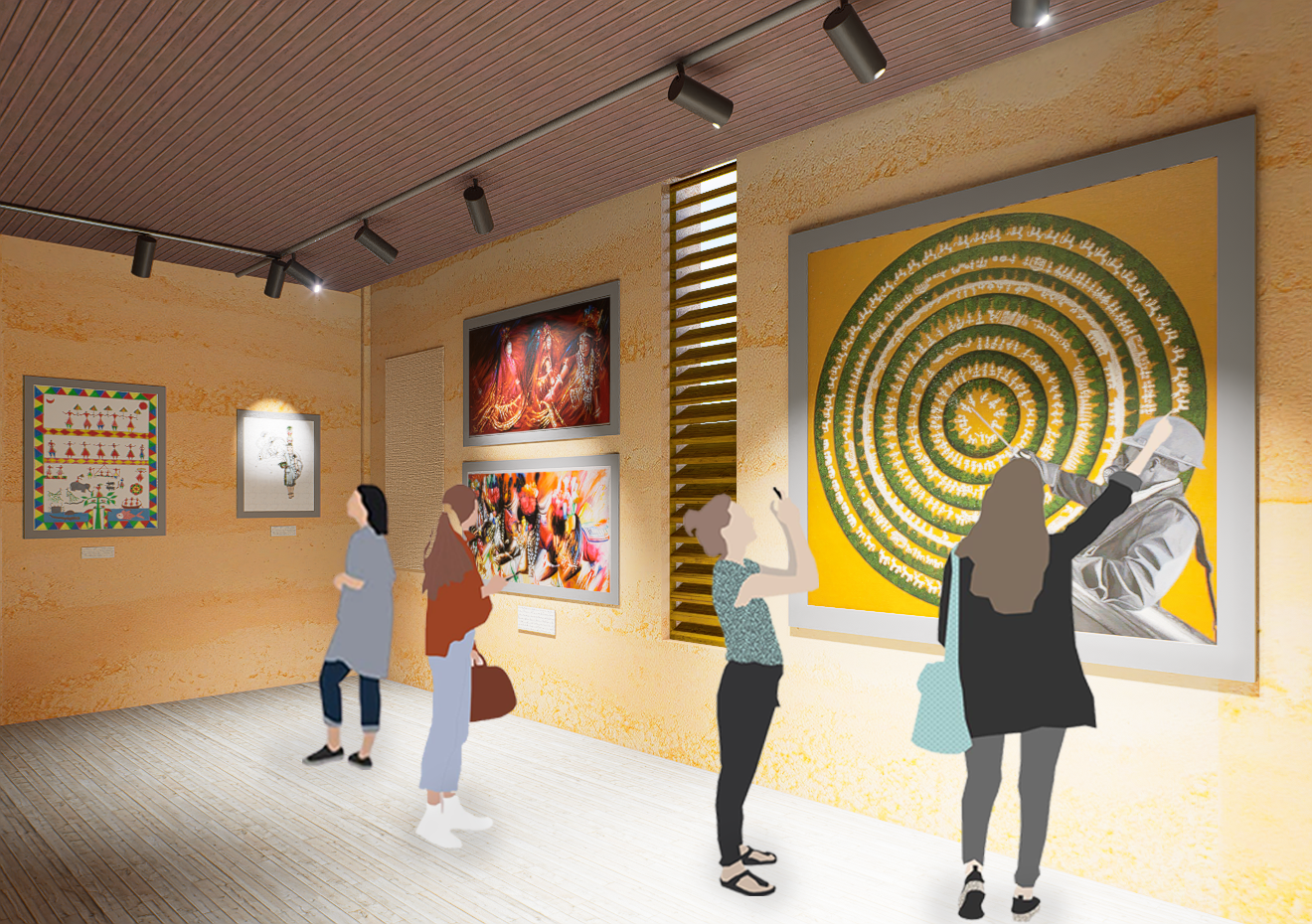
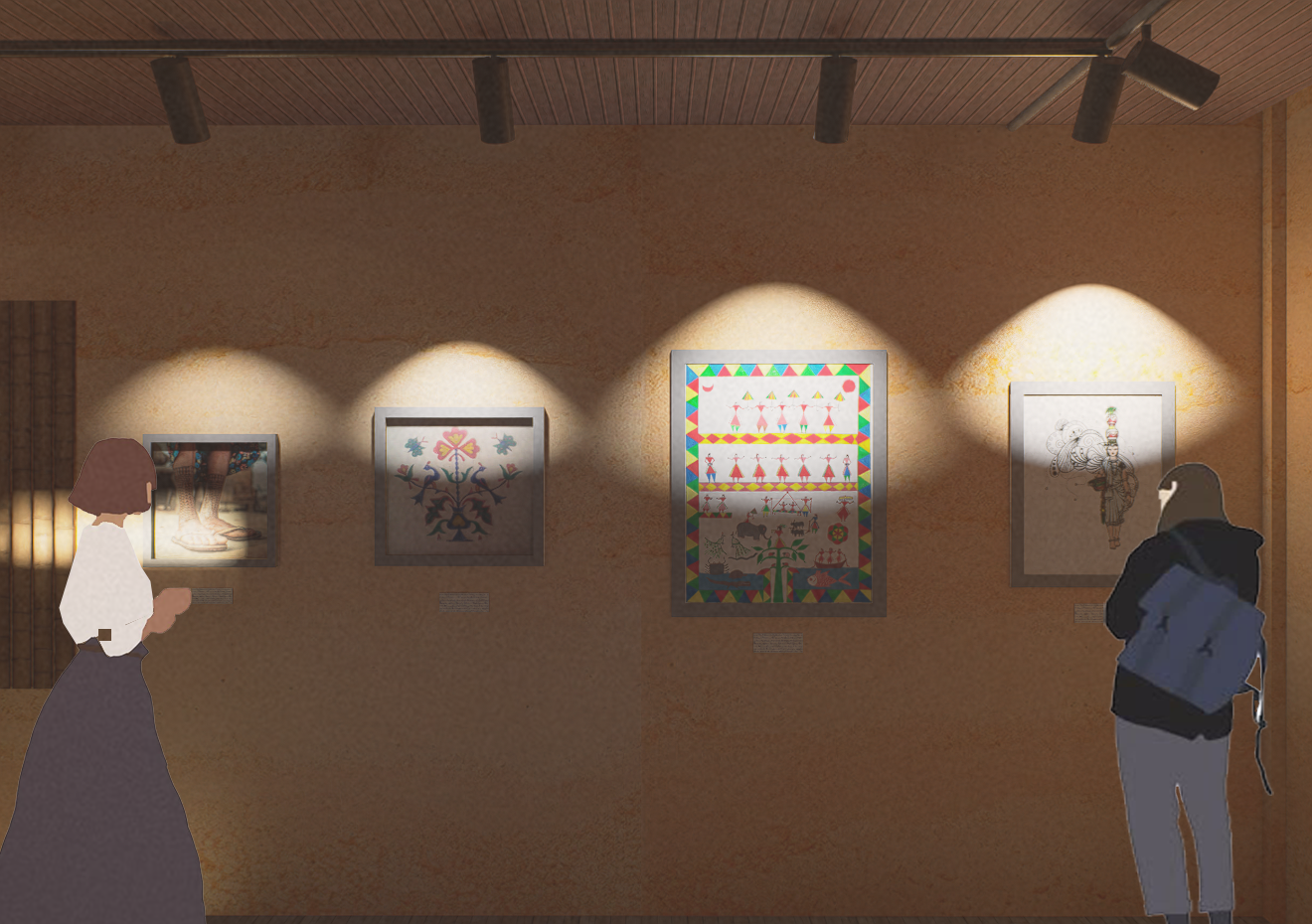
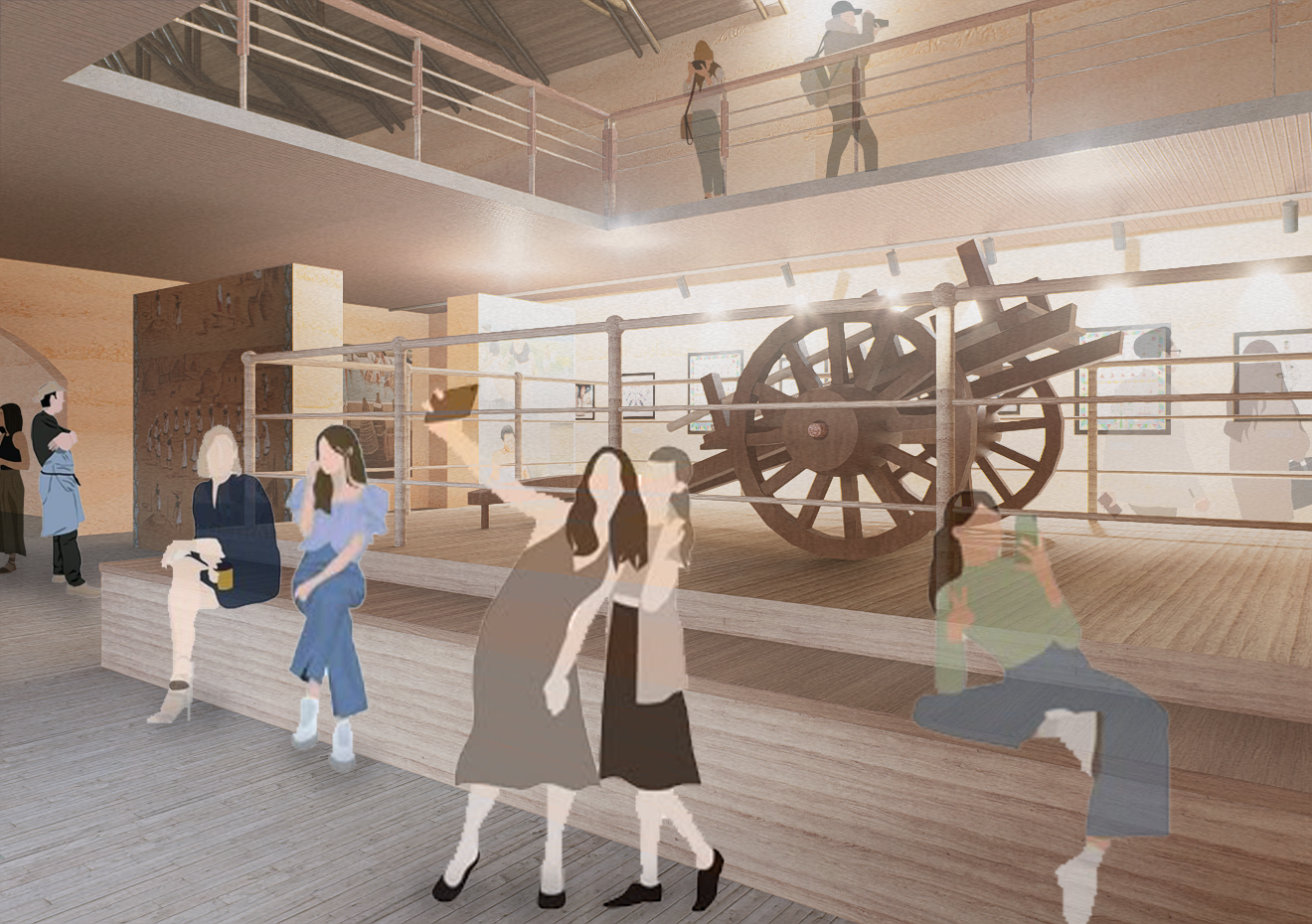
Cultural Zone: At the core of the site, this zone acts as the heart of the centre, containing
spaces for exhibitions, performances, and cultural engagement. Its centrality reinforces the
importance of cultural immersion in the visitor journey.
Educational/Craft Zone: It is located in the southern part of the site. This area houses
workshops and learning spaces, supporting skill-sharing, demonstrations, and craft-based
tourism.
Residential Zone: It is placed toward the northwest, this zone provides accommodation for
long-term guests or staff. It is buffered by surrounding recreational spaces to ensure privacy
and comfort.
Recreational Zones: It is placed centrally within the site, offering open, green spaces for
informal gatherings, leisure, and interaction, enhancing the overall ambience and
community feel.
Design Development
Way to the Centre
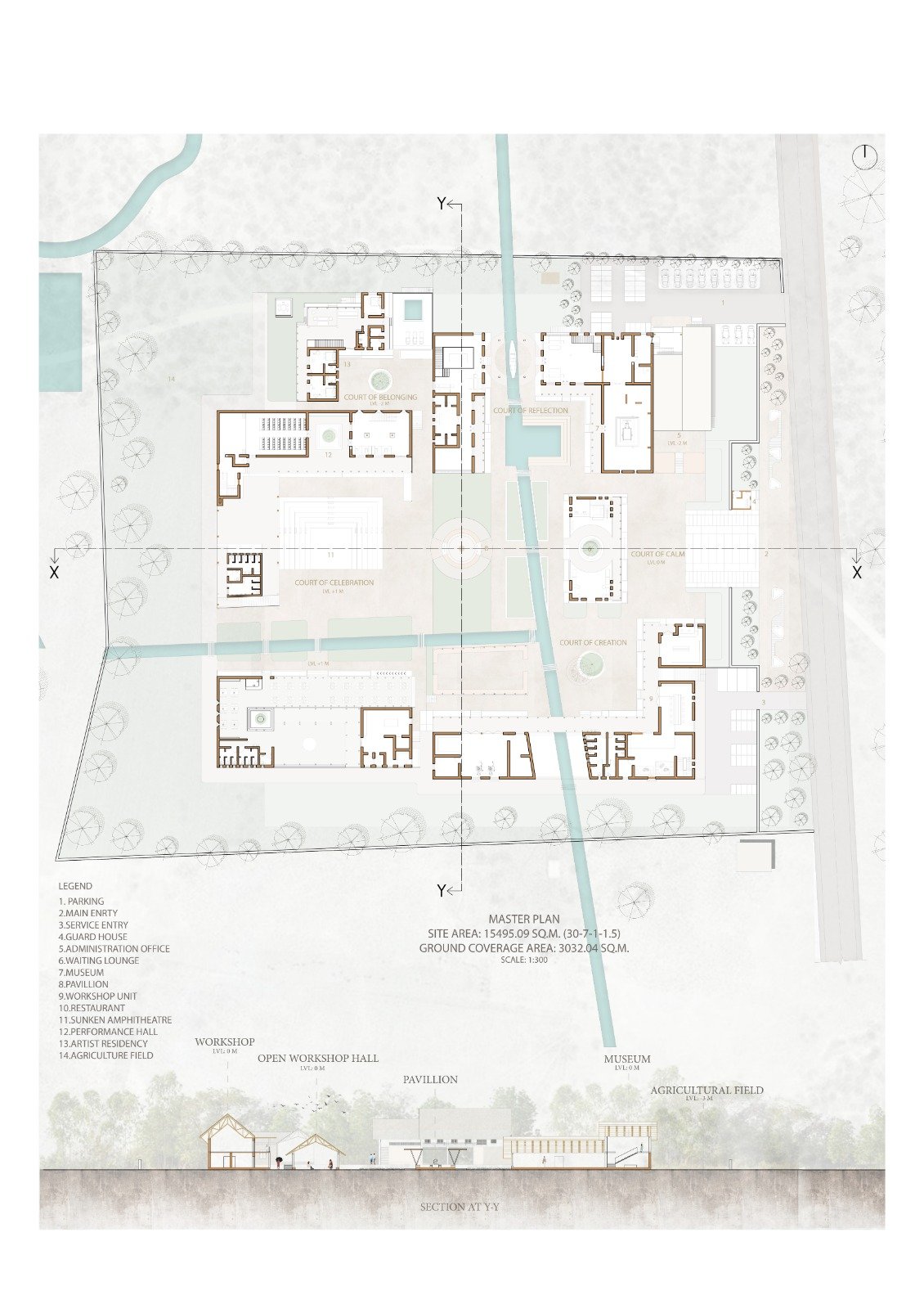
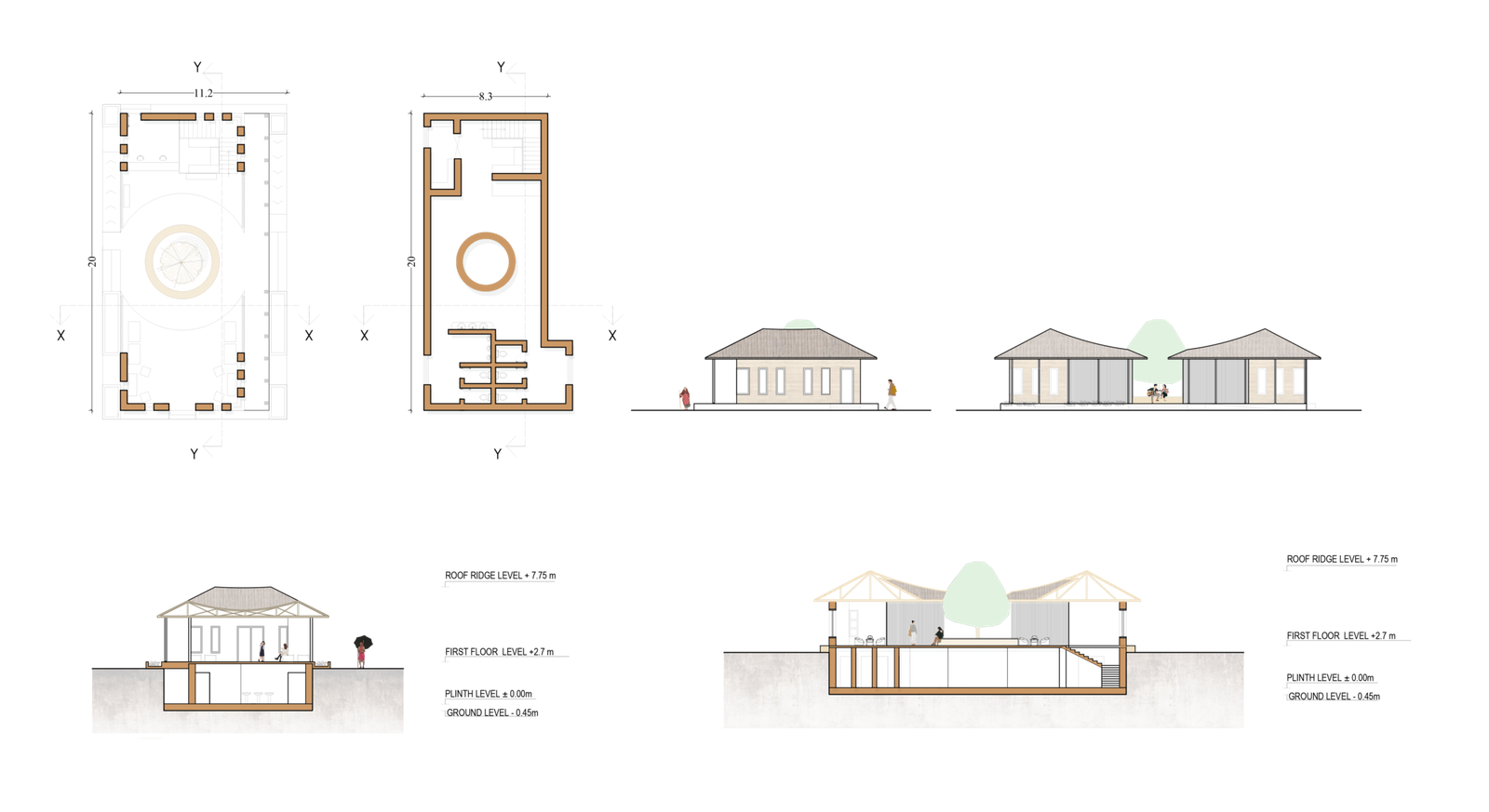
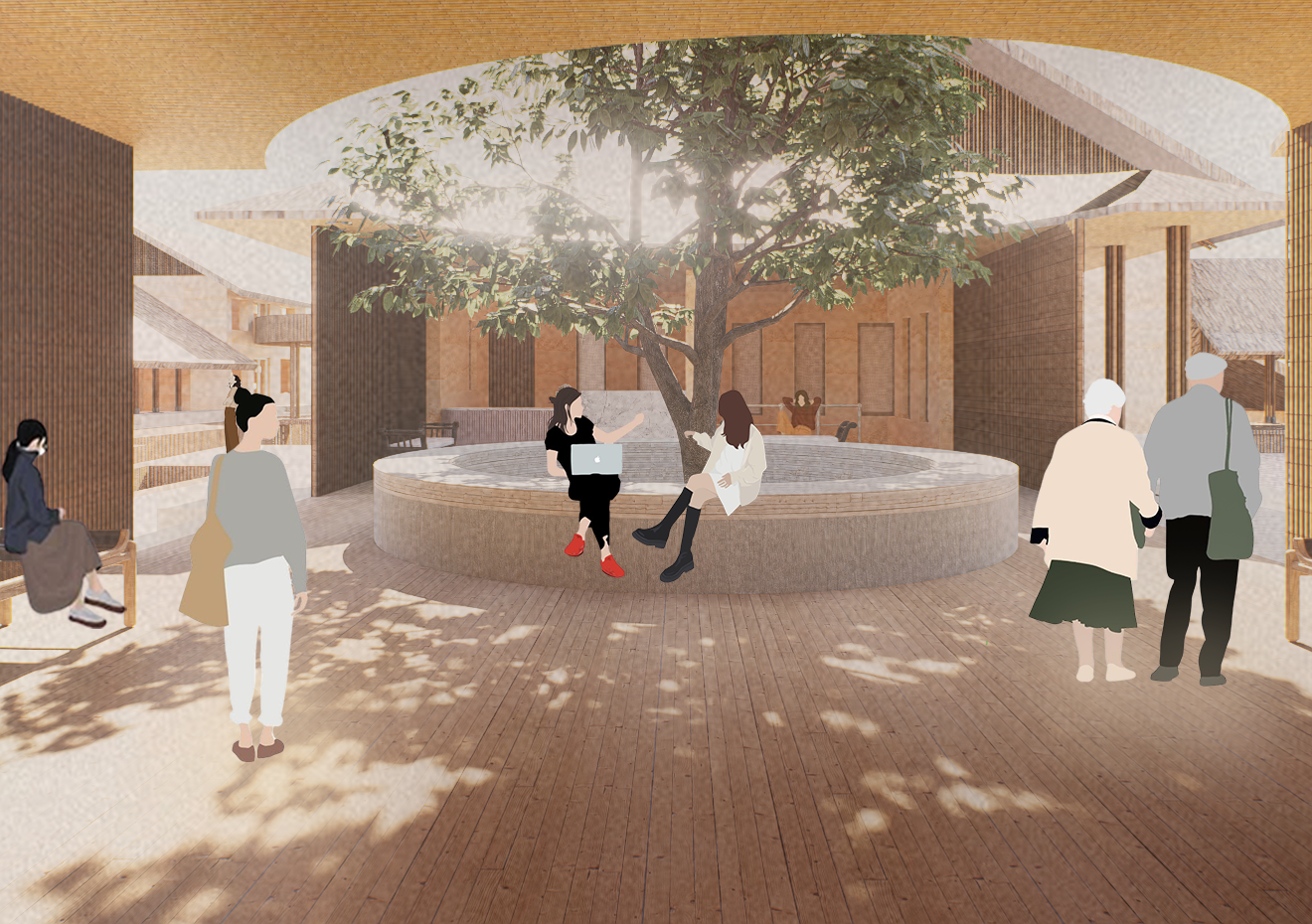
Court of Calm
Waiting Lounge
Court of Reflection
Museum
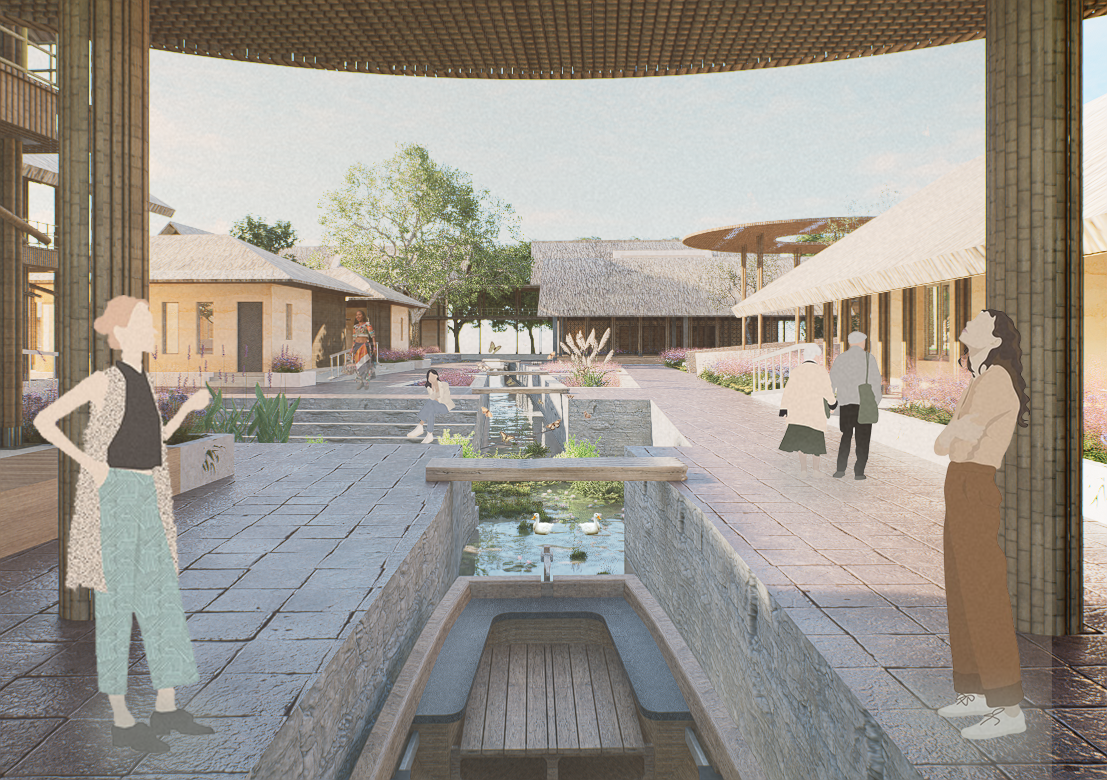
Court of Creation
Workshop Block
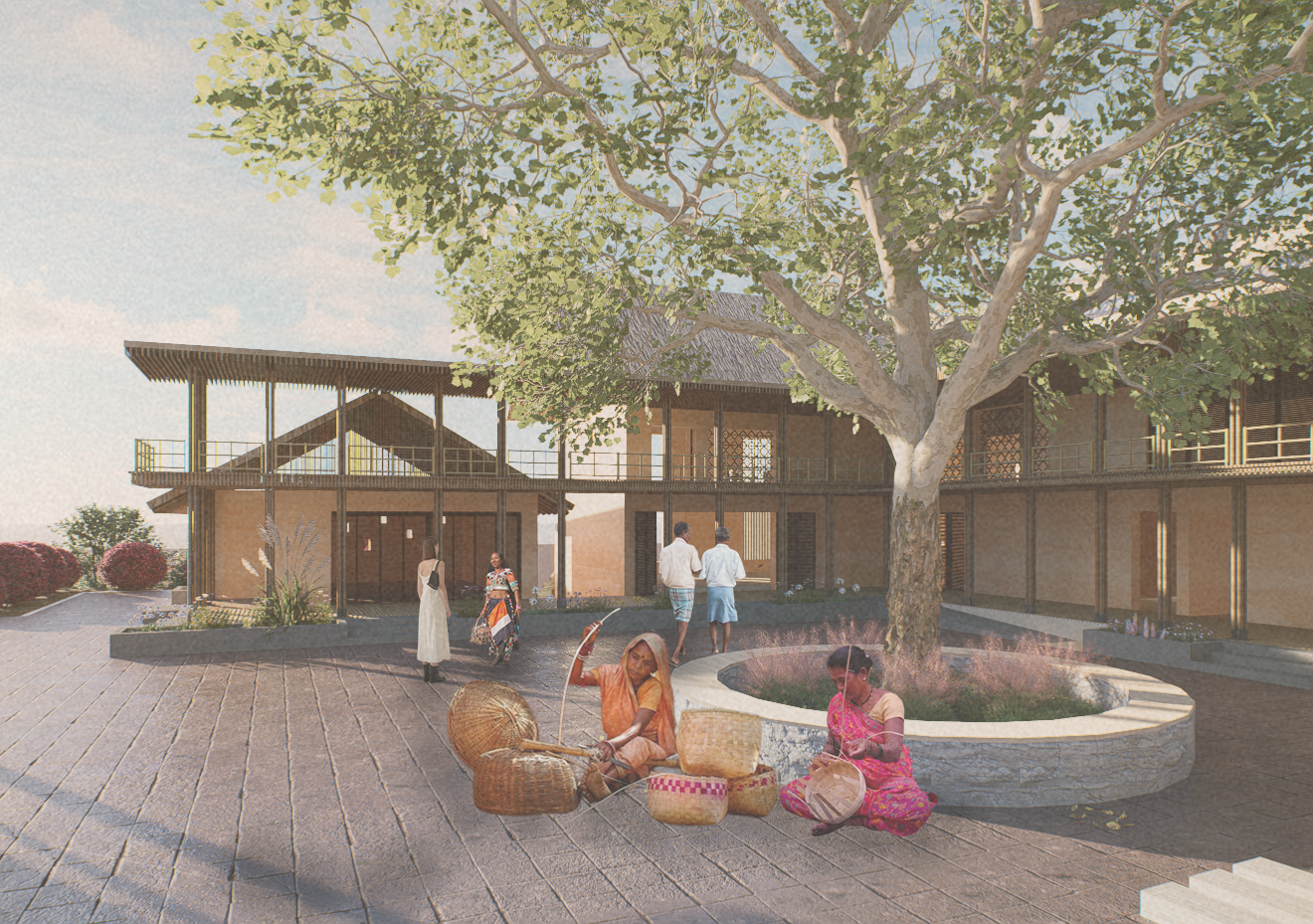
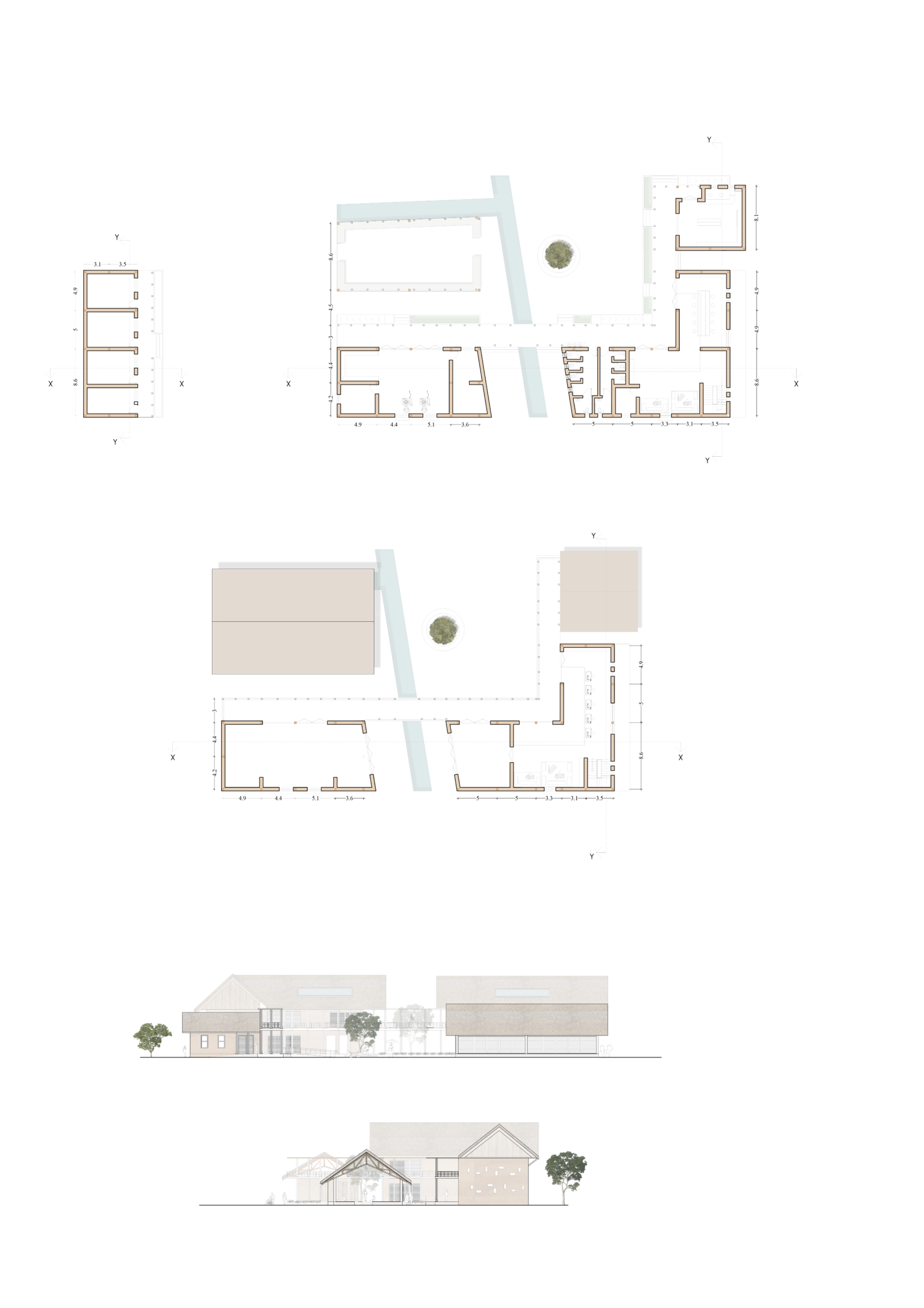
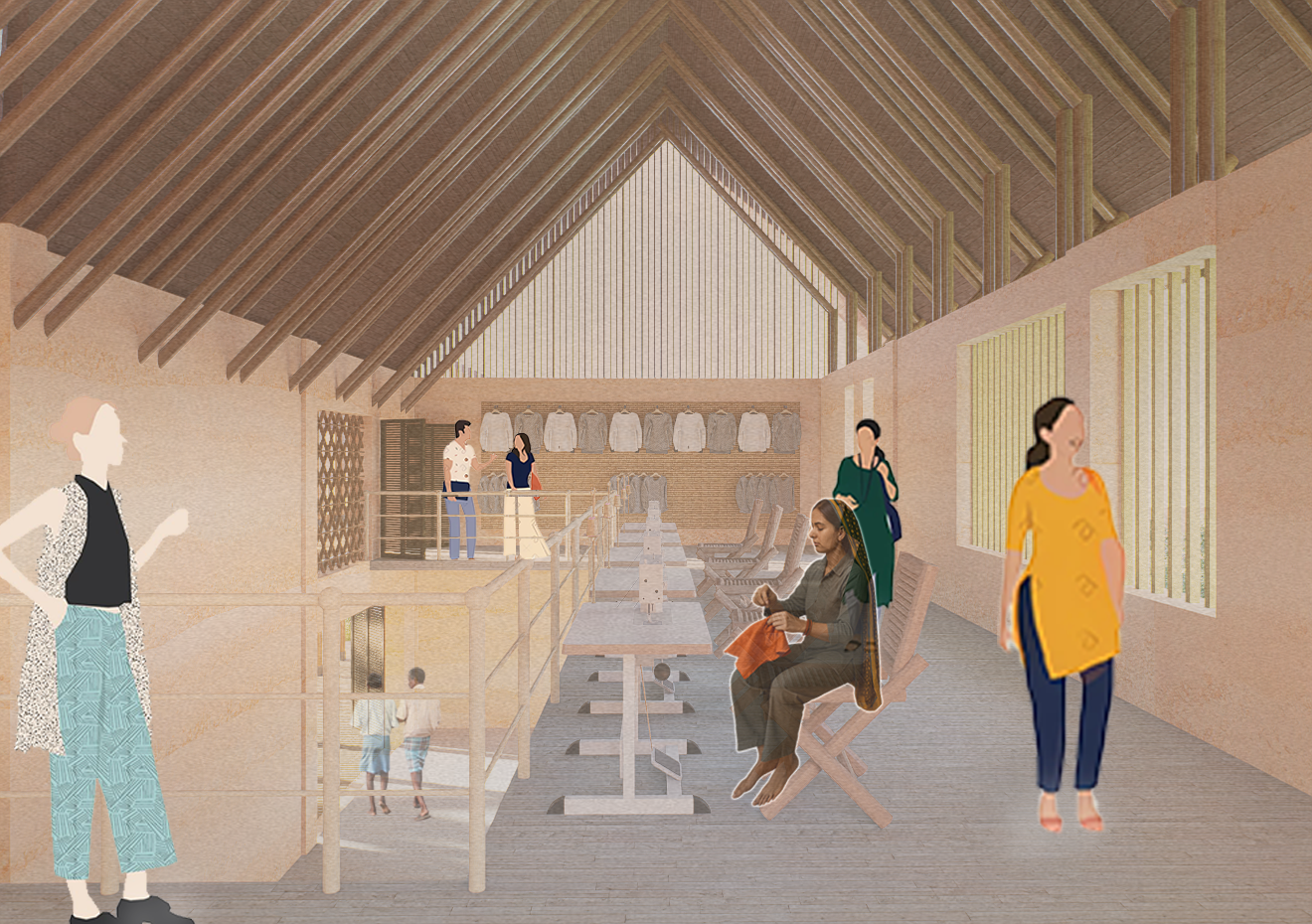
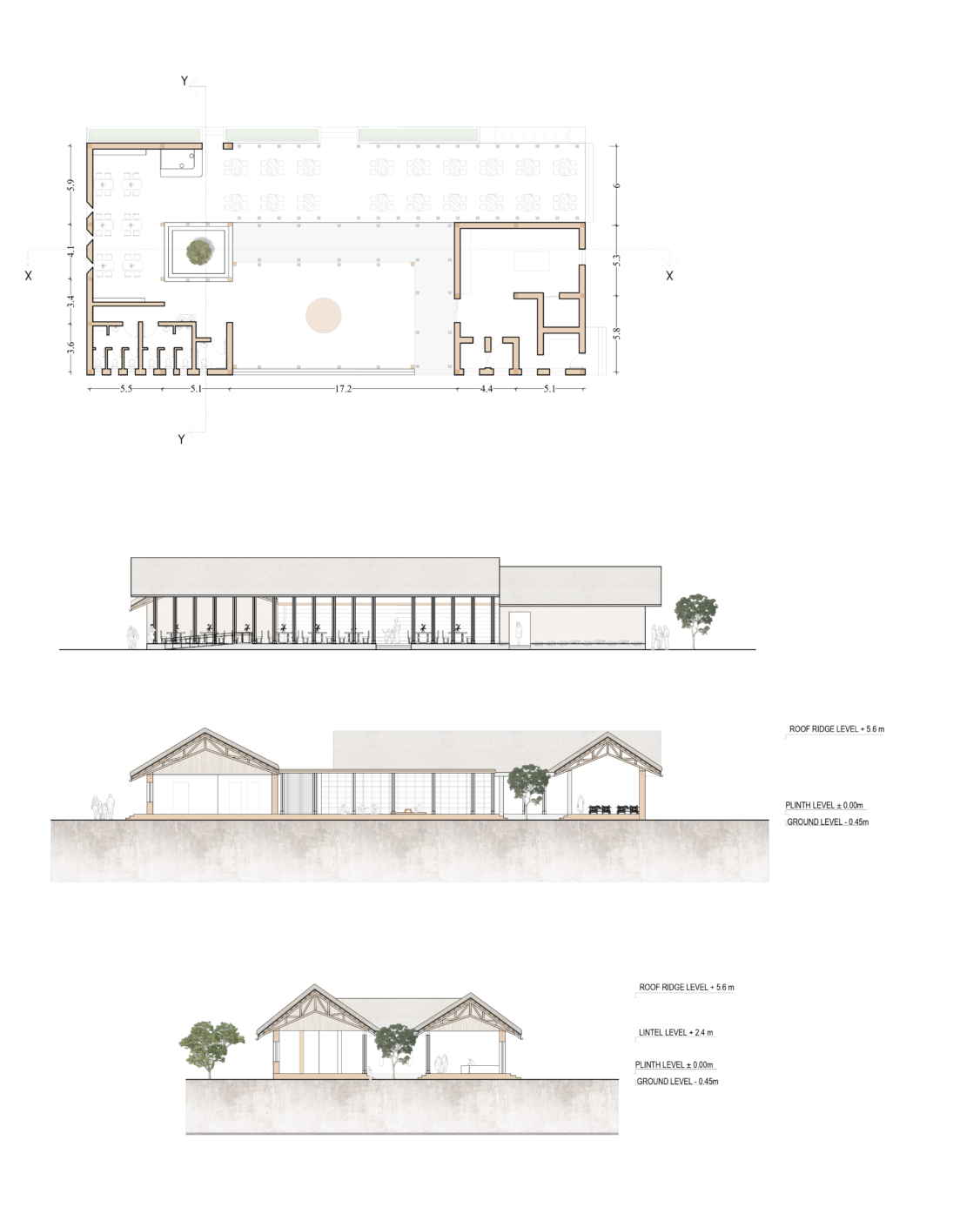
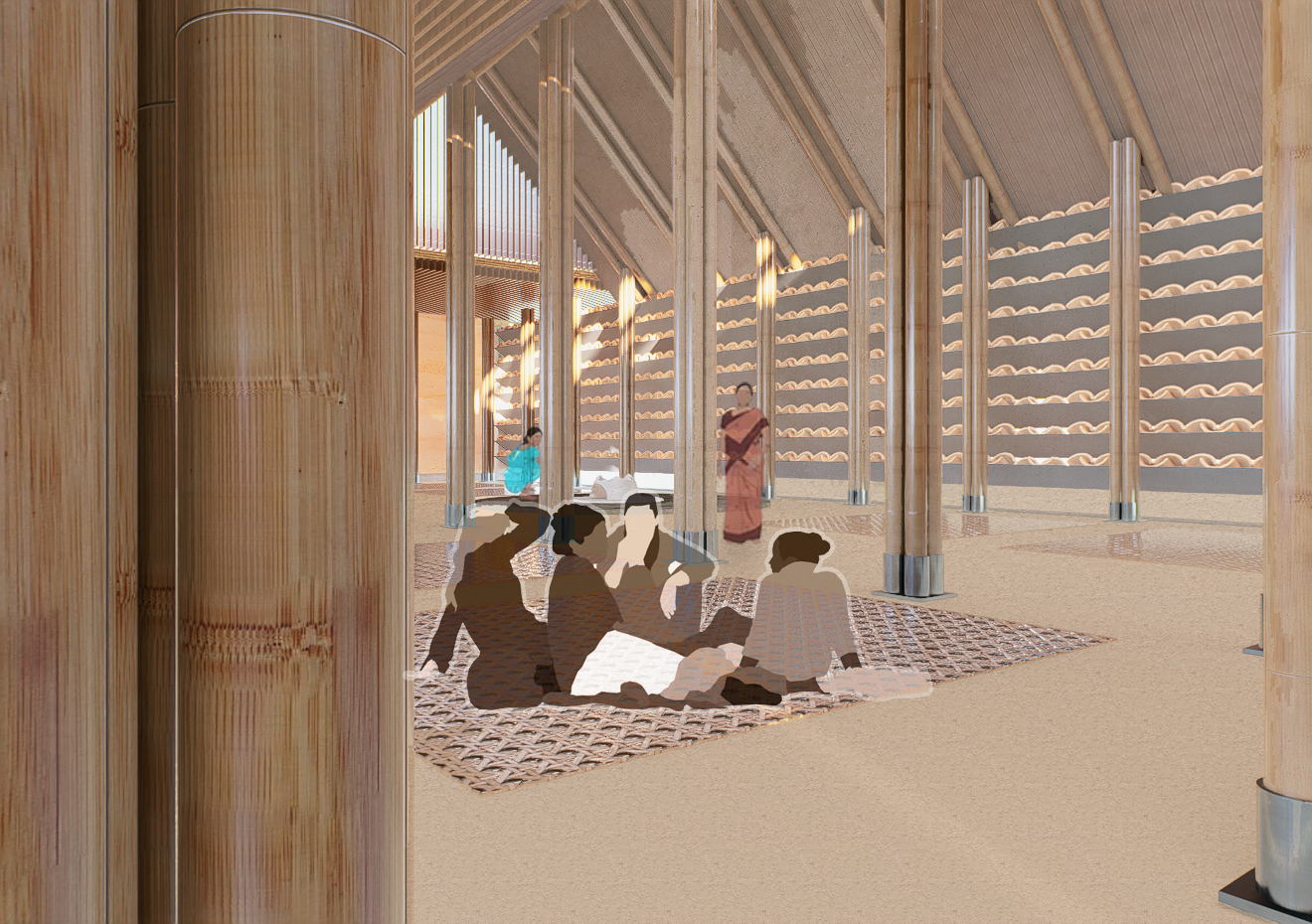
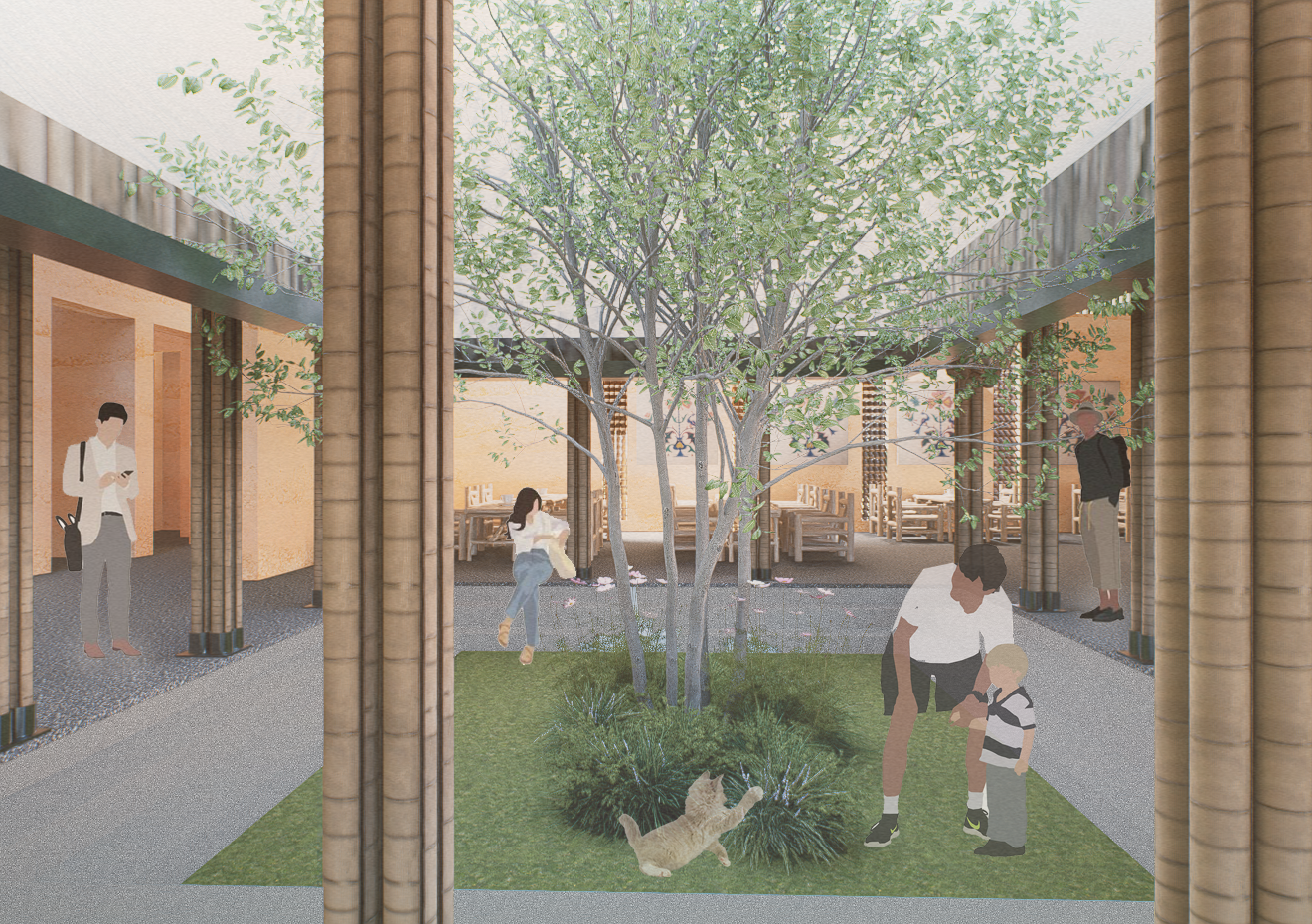
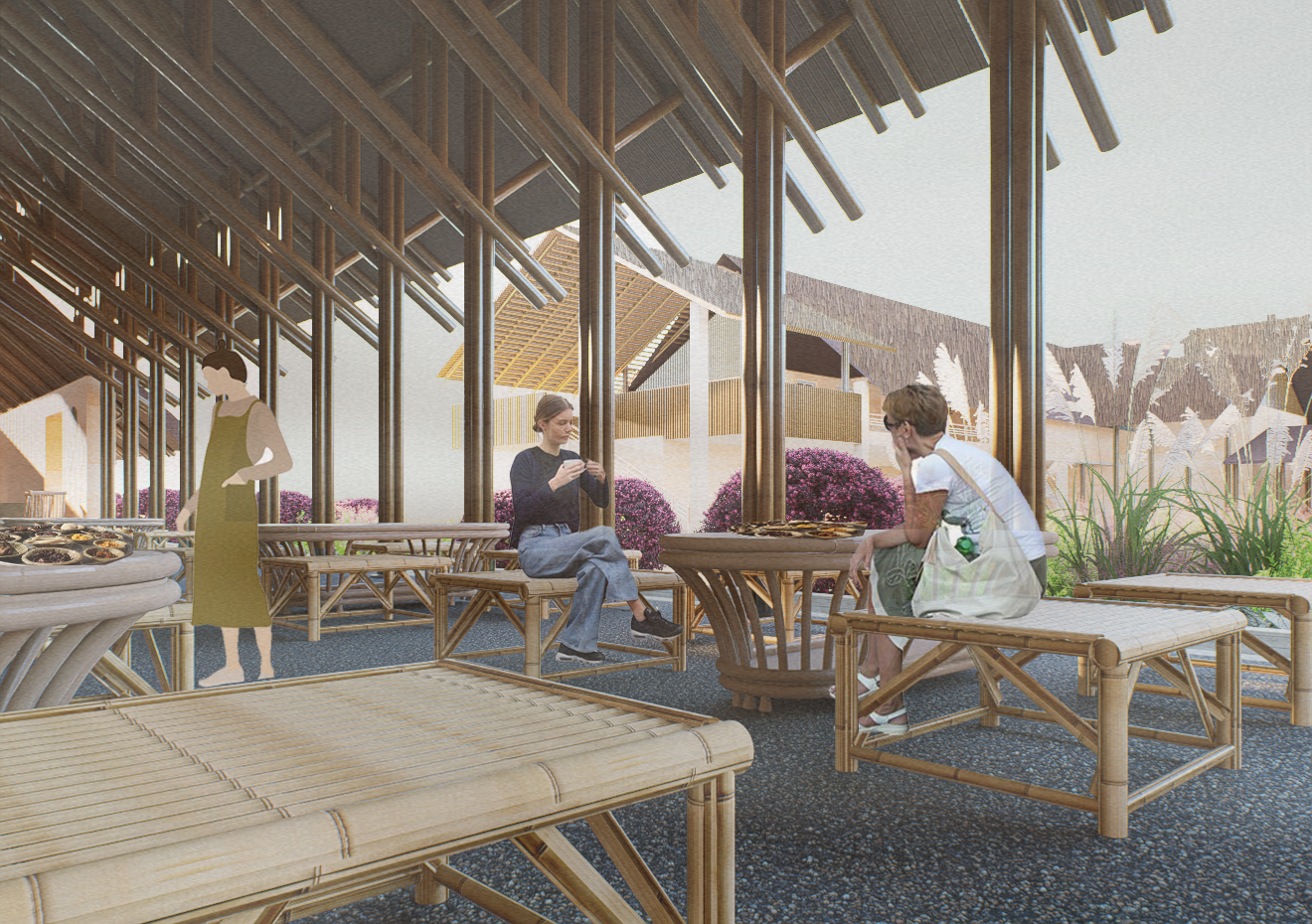
Restaurant
Court of Celebration
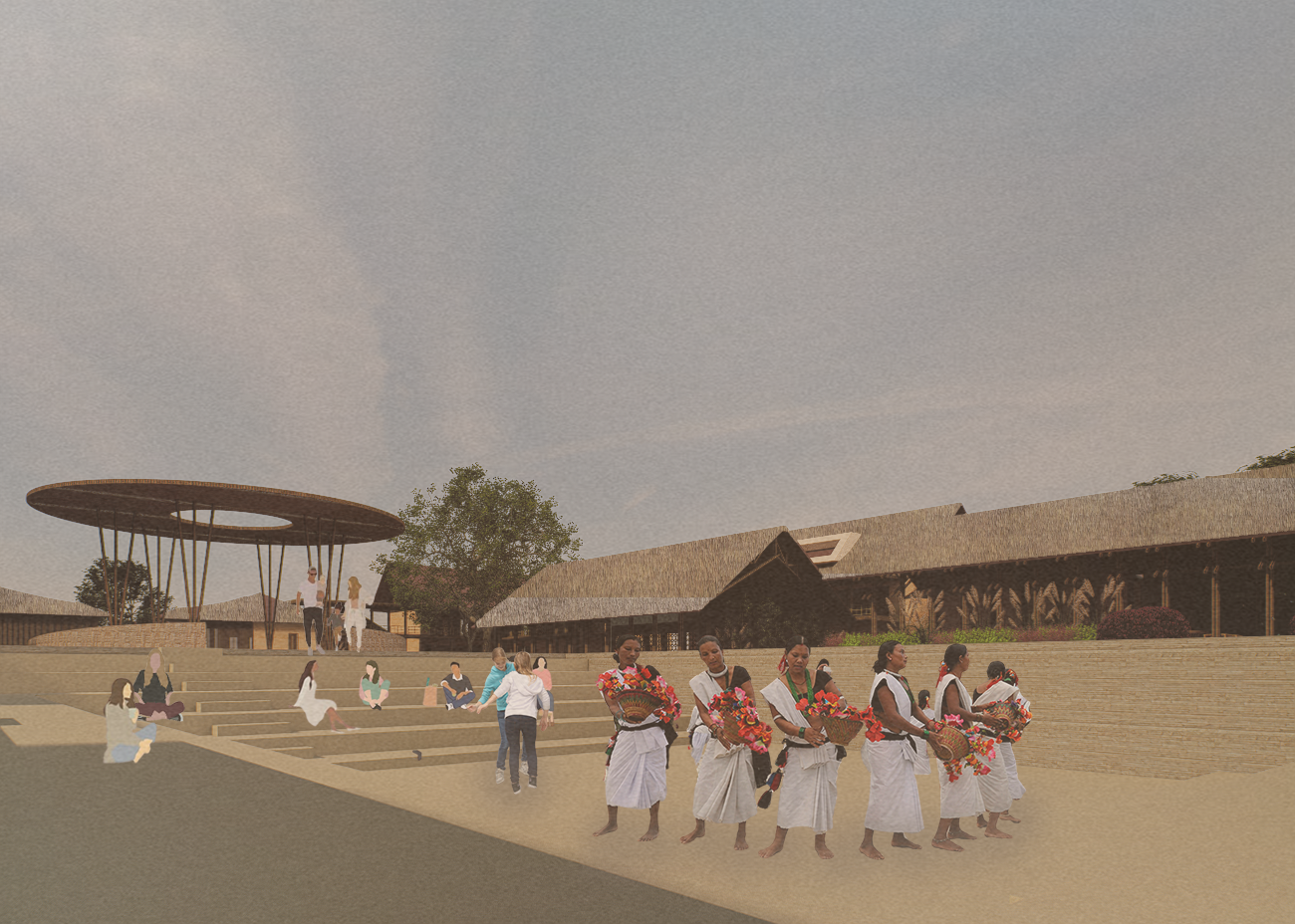
Performance Hall
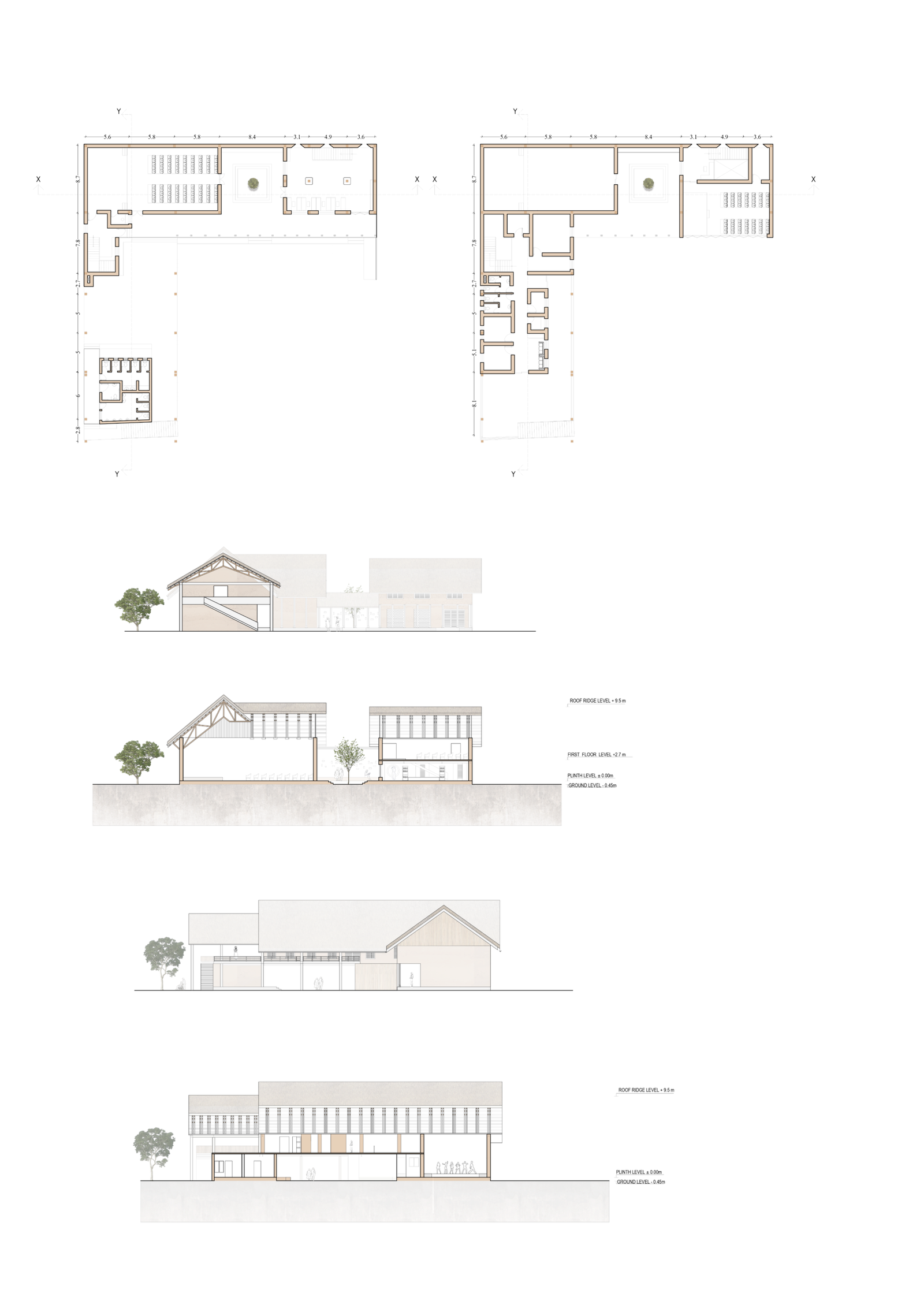
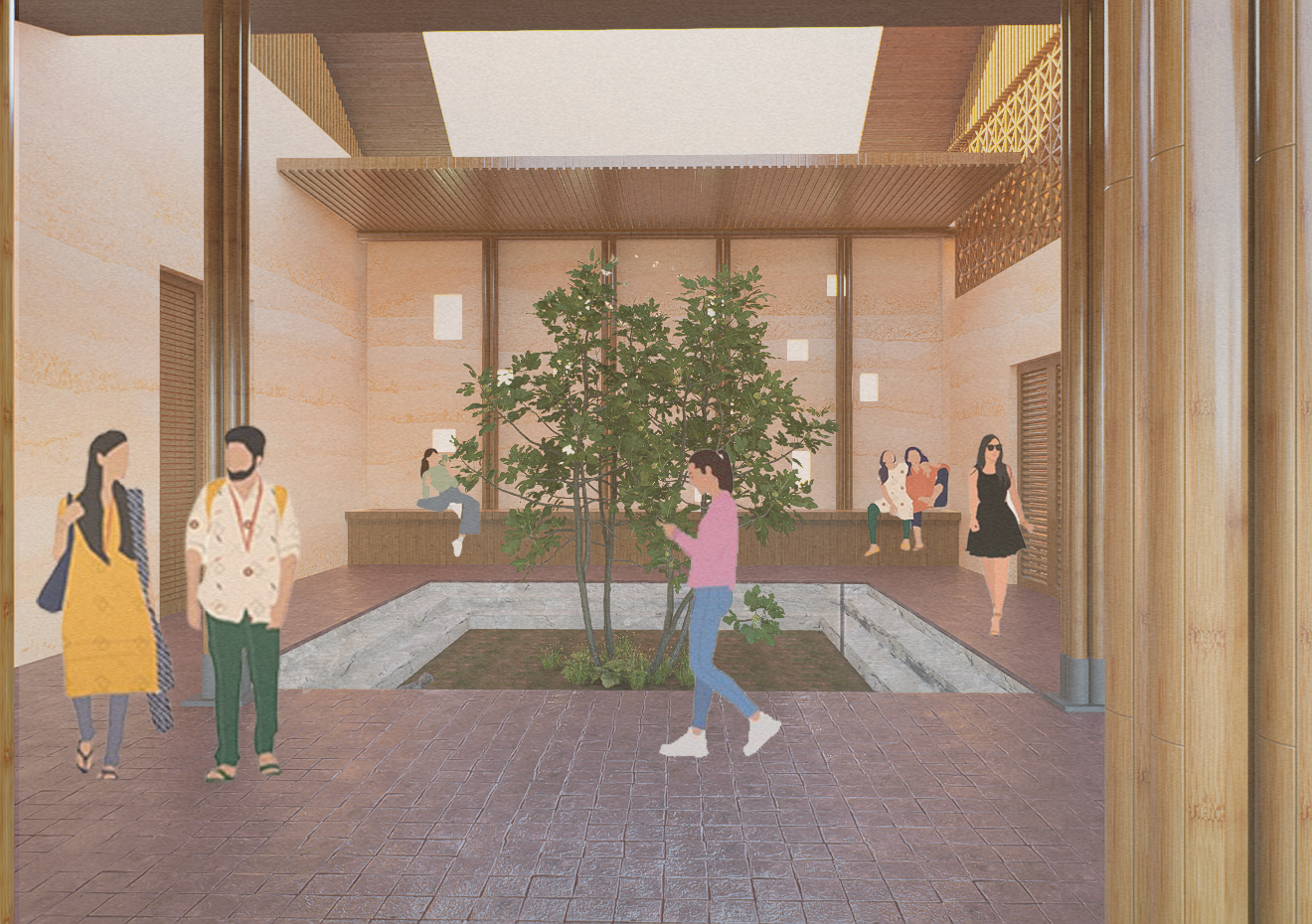
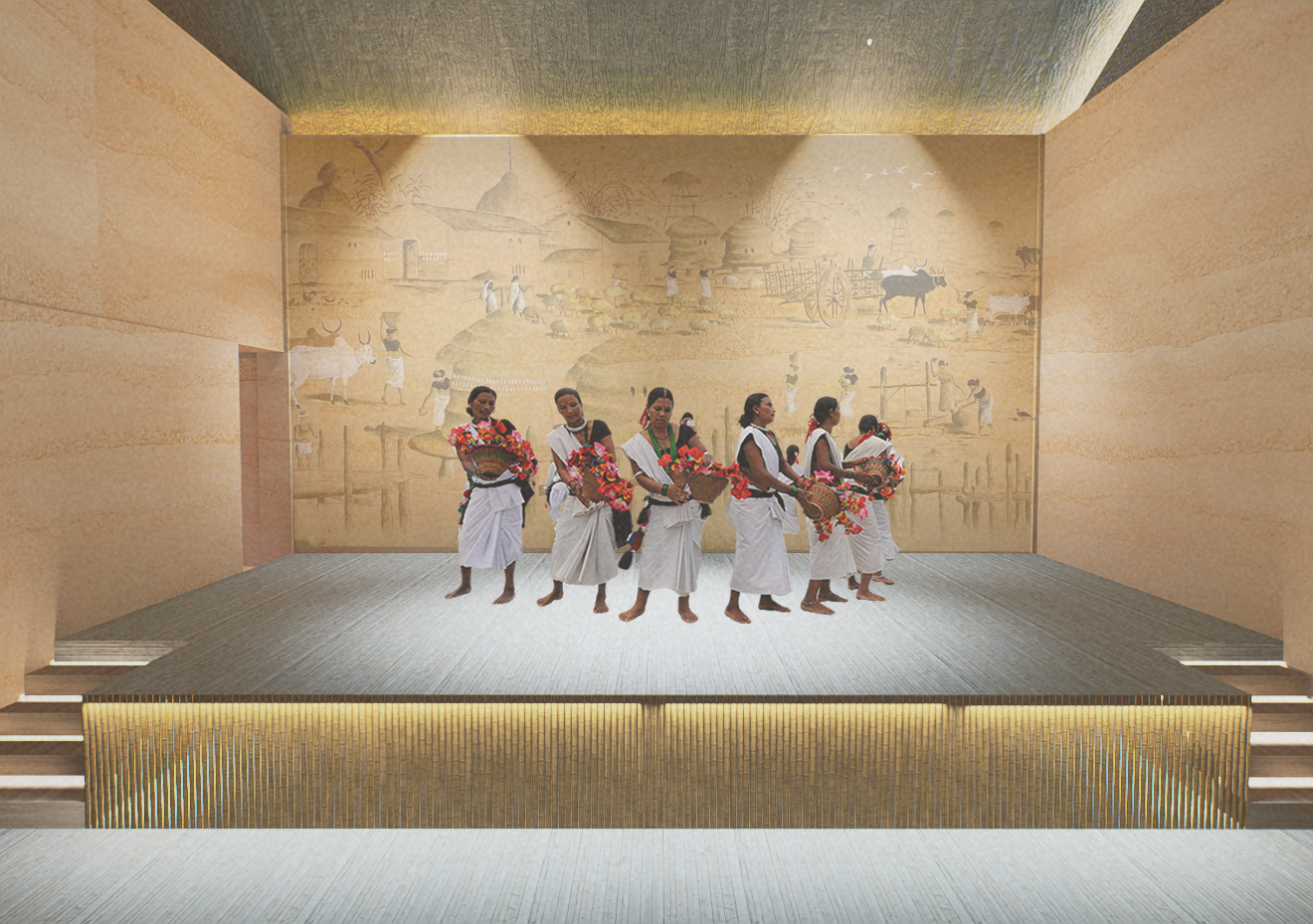
Court of Belonging
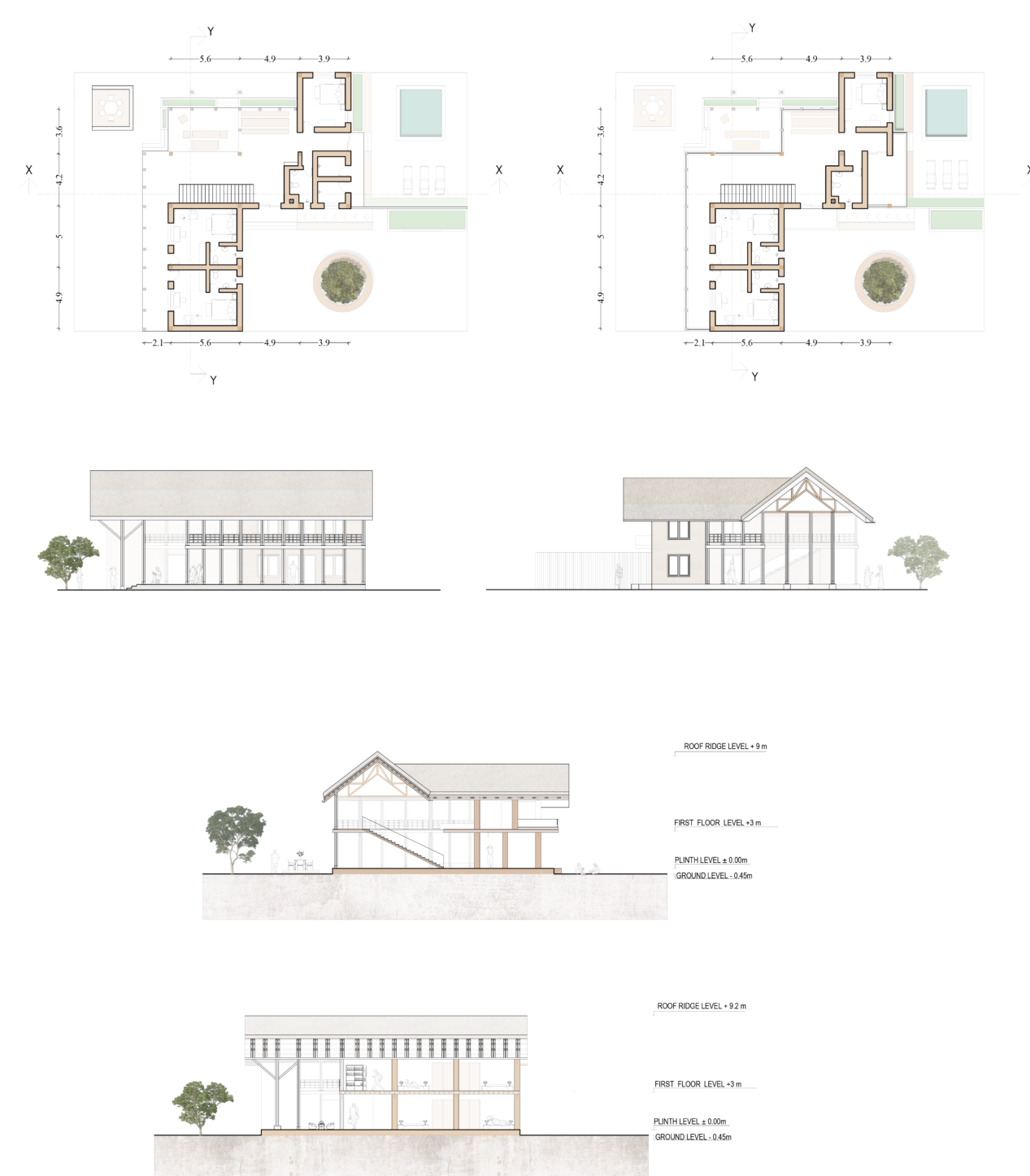
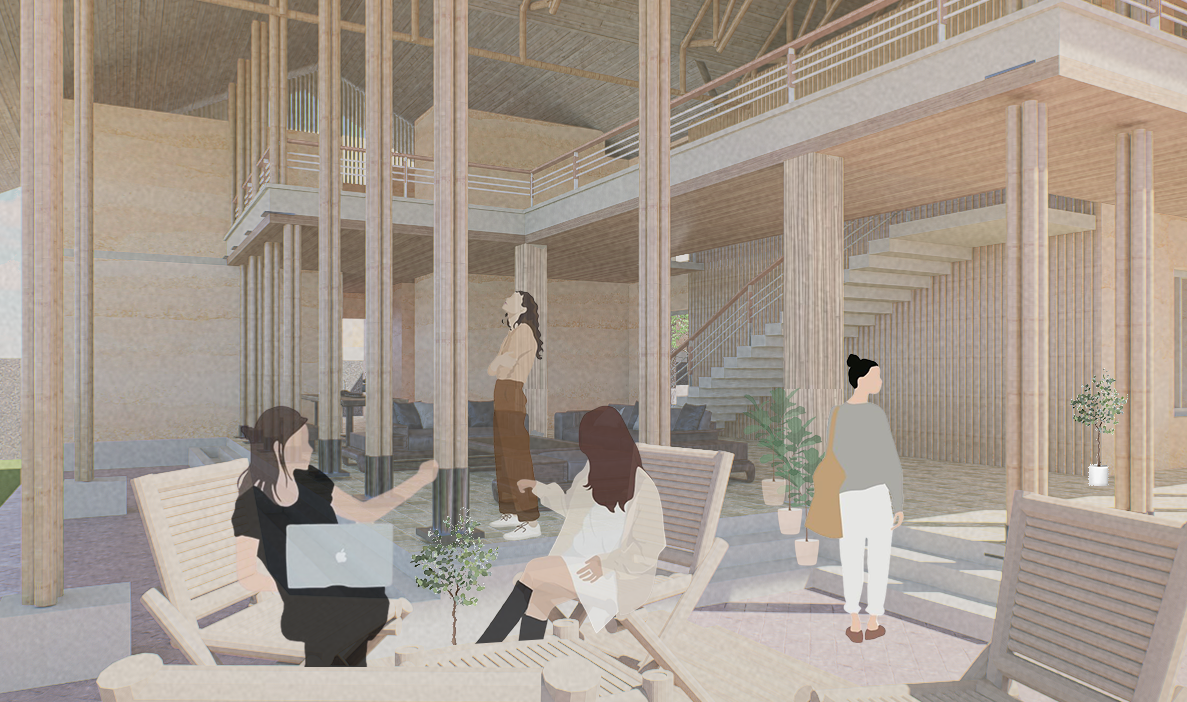
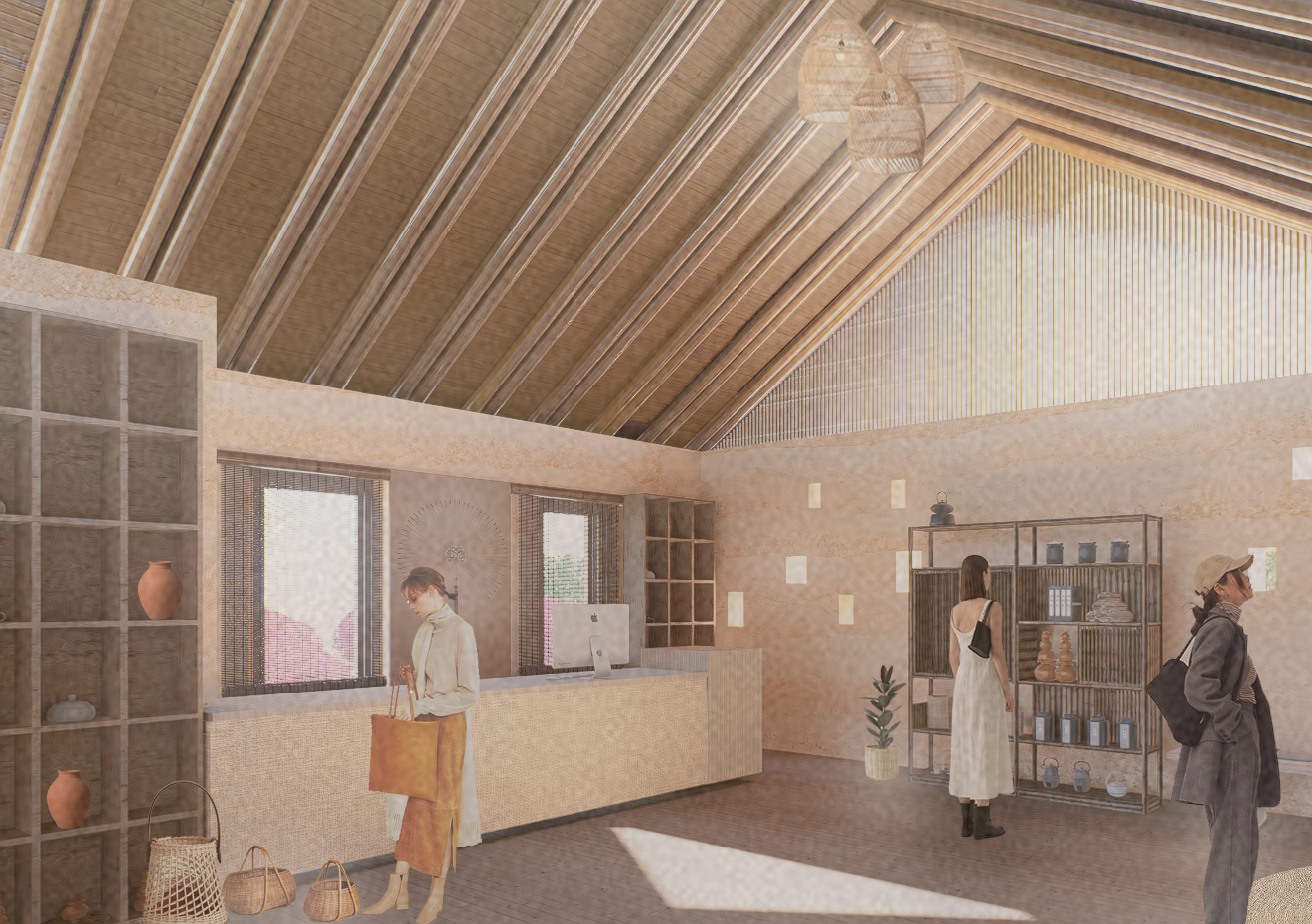
Souvenir Shop
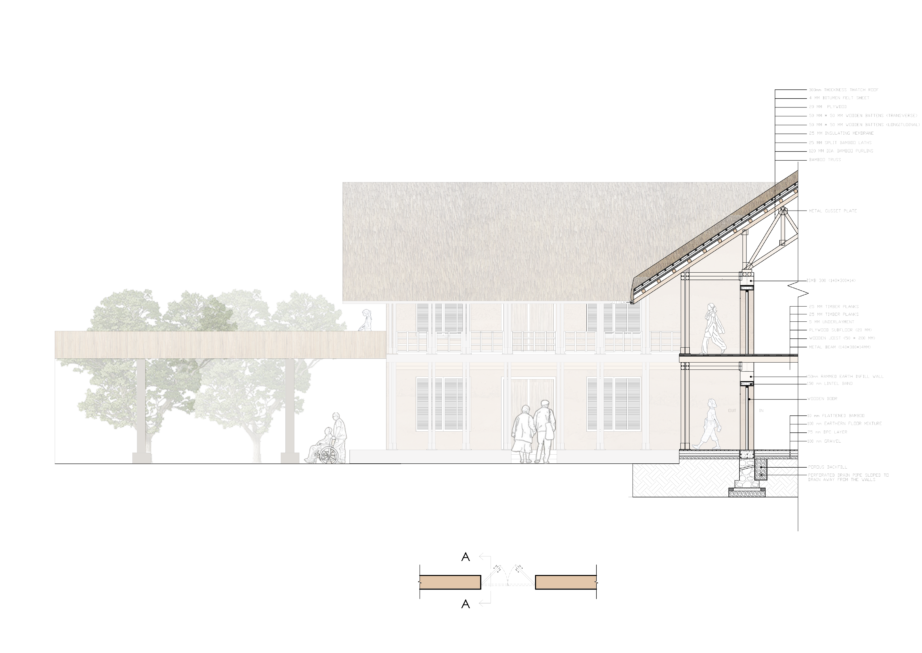
Structural System
Wall Section
“A tribute to the Tharu people , their traditions, their crafts, and their stories — preserved in spaces that celebrate the past while shaping a meaningful future”